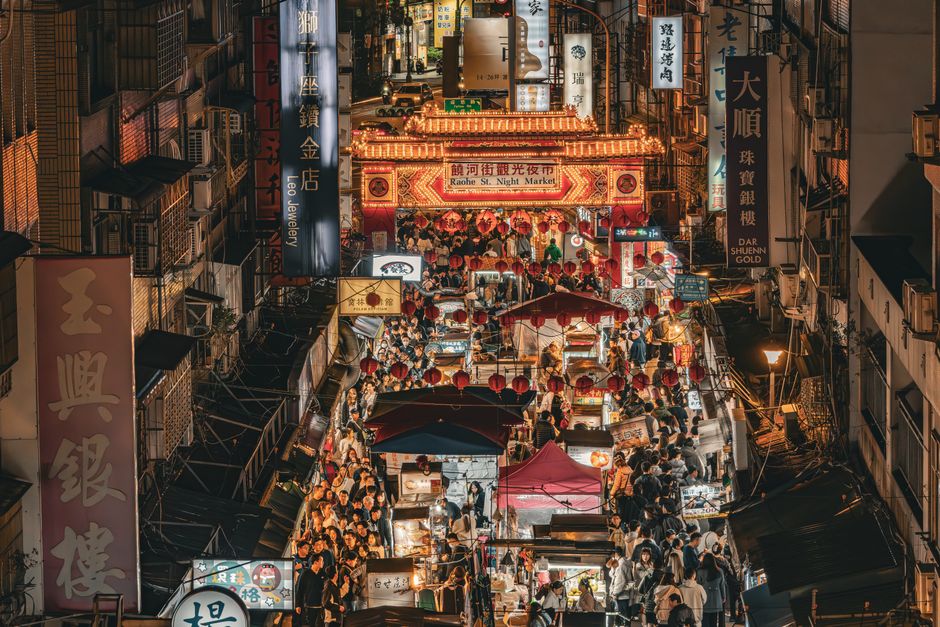
The best way to explore Taipei’s night markets is to visit two or three with different personalities, rather than rushing through every famous name in one evening. Start with Raohe for a classic first visit, choose Ningxia for focused street food, and use Shilin or the Wanhua markets when you want a wider neighborhood experience. Give each market about two hours, arrive hungry but not exhausted, and keep your route tied to the MRT.
Which Taipei night market fits your evening?
Taipei’s night markets are not interchangeable. Some are compact food lanes where you can eat well in one short circuit. Choosing by atmosphere makes the evening easier and prevents the common mistake of expecting every market to offer the same experience.
Market character and practical timing
| Market | Best for | Suggested visit | Nearby transport |
|---|---|---|---|
| Raohe Street | First-time visitors, a clear walking route, classic snacks | 2 hours, from around 17:30 | Songshan Station |
| Ningxia Road | Serious eating, compact layout, traditional snacks | 90 minutes to 2 hours, from around 18:00 | Shuanglian or Zhongshan area |
| Huaxi, Guangzhou, and Wuzhou Streets | Historic Wanhua, temple visits, several connected markets | 2 to 3 hours, from around 17:00 | Longshan Temple Station |
Raohe is the strongest single-market introduction because its main street feels easy to follow and the entrance sits close to Songshan Ciyou Temple. Shilin offers the most variety, but it can feel scattered if you expect one neat lane. The Wanhua group works best as a neighborhood walk, not as one isolated food stop.
Check the day before you go
Opening patterns can shift around public holidays, heavy rain, festivals, and local events. The official Taipei Travel night-market directory lists current locations and operating information. Use it to confirm your chosen market on the day of the visit, then check the Taipei MRT visitor information before setting a late route.
Choose one market instead of chasing all of them
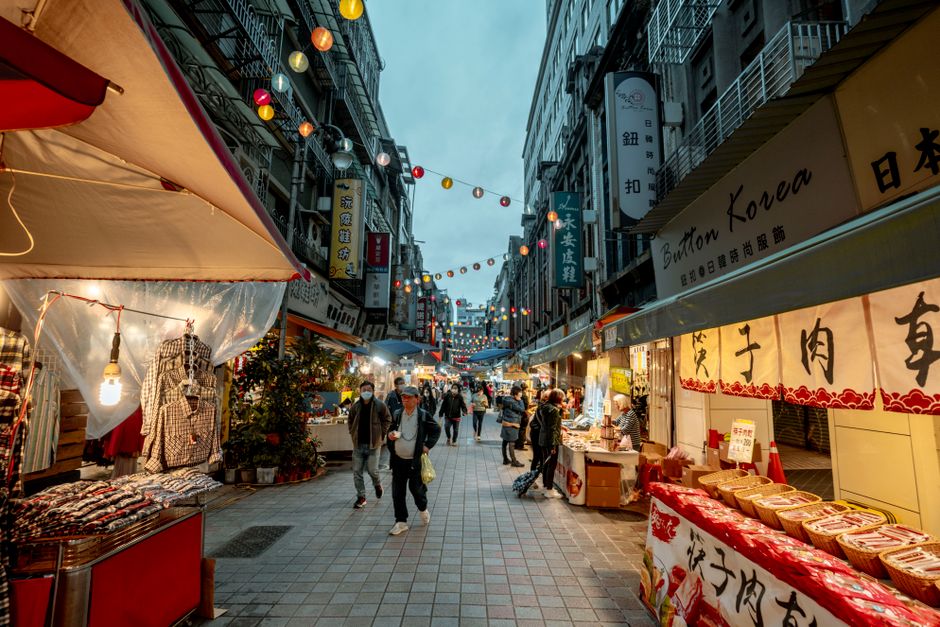
The clearest verdict
For a first night in Taipei, choose Raohe Street Night Market and stay for the full circuit; it gives you a strong mix of food, crowds, temple scenery, and easy transport without demanding a complicated plan.
Why this works
Trying to combine Raohe and Shilin in one evening sounds efficient, but the travel time, station transfers, and appetite loss usually make both stops less enjoyable.
How to build a two-night Taipei night-market itinerary
A good night-market itinerary has a simple rhythm: begin with a nearby daytime sight, arrive before the busiest period, eat in small rounds, pause somewhere calm, and leave enough time to return by public transport. The goal is not to collect the most stalls. It is to notice how each neighborhood changes after dark.
Night one: Raohe and Songshan
Spend the late afternoon around Songshan Ciyou Temple and the streets near the market entrance. Arrive around 17:30, when many stalls are ready but the central lane is not yet at its tightest.
Eat in three stages. Start with one savory snack, add a soup or grilled item, then finish with something sweet or cold. Share portions when possible. A single large meal makes it difficult to sample the market’s range, and carrying leftovers through a dense crowd is awkward. Leave Raohe before midnight even if some stalls remain open; the last part of the evening should be an easy trip back, not a race for the final train.
Night two: pick one food or culture route
For the food route, begin at Ningxia Road after visiting Dihua Street or the surrounding Datong district. The market is compact, so a 90-minute circuit can be enough. The district spreads beyond the most photographed lanes, so leave room for detours.
For the historic route, start at Longshan Temple before walking toward Guangzhou Street, Wuzhou Street, and Huaxi Street. This option rewards travelers who want more than snacks. The streets have different moods, and the area feels strongest when treated as a connected neighborhood rather than a checklist of attractions.
What to do when the market feels crowded, wet, or confusing
Taipei’s night markets are outdoor public spaces, so conditions matter. Heat, sudden rain, slippery pavement, scooter traffic, and long queues can change the experience within minutes. The best response is a flexible plan with a clear exit point.
Use this crowd-and-weather system
- Arrive early in the main eating window. Reaching the market between 17:00 and 18:00 gives you more space and makes it easier to understand the layout.
- Walk once before ordering. Note stalls with long local queues, open seating, and food that must be eaten immediately.
- Carry only what you need. A small cross-body bag is easier to manage than a large backpack in a narrow lane.
- Keep a rain plan. If rain becomes heavy, move into a nearby temple, station area, department store, or covered street instead of standing under one crowded awning.
- Eat in short rounds. One snack, a short pause, then the next choice gives your stomach and your group time to reset.
- Use landmarks, not vague directions. Agree on a temple gate, MRT exit, or large intersection as your meeting point.
- Leave before fatigue becomes a problem. If the group is tired, stop searching for the perfect final dish and take the direct route home.
The mistake that ruins the evening
The most common failure is arriving without a limit on time, food, or walking distance. People queue for one famous stall, lose track of the group, and then discover that the next market is across the city. One strong market with attention beats three rushed visits.
Eat respectfully and read the market like a local
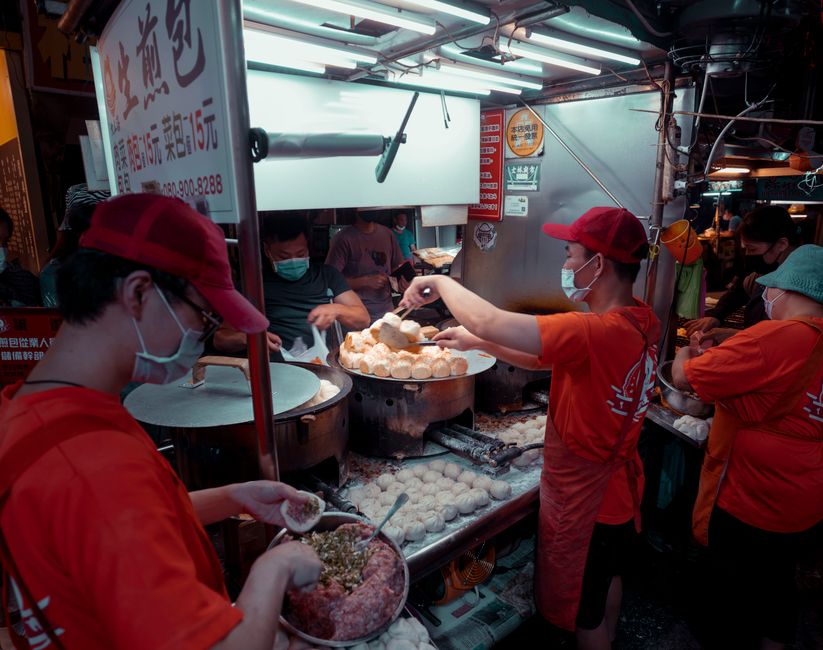
The smoothest visitors observe first, order clearly, and move away from the counter once their food is ready.
Small habits that make a real difference
Keep your group compact while walking. Do not stop in the center of a queue to decide. If a stall has a picture menu, point to the item and confirm the quantity before paying. When a vendor uses a number system, take the ticket and watch the display or listen for your number.
Use chopsticks, spoons, and small bowls as provided, and place waste in the correct bins when they are available. Taipei’s MRT stations do not allow eating or drinking, so finish food before entering the paid area. This simple detail prevents a rushed final bite at the station gate.
How to handle unfamiliar food
Start with foods that are easy to identify, then try one unfamiliar item when your group has enough time to pause. Ask about strong flavors, seafood, organ meats, spice, and allergens before ordering. Translation apps can help with a dish name, but they may not explain every ingredient in a mixed snack. If someone has a serious allergy, carry a written Chinese explanation and ask more than one question when the answer is unclear.
Do not judge a stall only by its appearance. A plain counter may serve an excellent specialty, while a bright sign may be aimed mainly at passing visitors. Local queues, fast turnover, and a focused menu are useful clues, but they are not guarantees. The right approach is curious, direct, and willing to move on.
Taipei night markets: questions travelers ask before going
Which night market is best for first-time visitors?
Raohe Street Night Market is the best first choice because it offers a clear route, a strong evening atmosphere, and an easy connection to Songshan Station. Arrive before the busiest period, walk the whole lane once, and then return to the stalls that interest you. This gives you structure without turning the visit into a timed tour.
Is Shilin Night Market worth visiting?
Use Jiantan Station, allow at least two hours, and expect to walk beyond the first cluster of stalls. Travelers who dislike crowds may prefer Ningxia, which feels more focused and easier to complete.
Can you visit Taipei night markets alone?
Yes. Solo visitors can move through queues faster, choose one portion at a time, and stop whenever the crowd becomes tiring. Ningxia is the easiest solo option because its food focus reduces unnecessary walking. Raohe also works well if you visit early. Keep valuables secure, avoid blocking narrow lanes while checking directions, and choose a visible meeting point if you are joining friends later.
How many night markets should you visit?
Two markets on separate nights is the right amount for most short Taipei trips. Add a third only if the markets sit near the rest of your day’s route. Taipei’s night markets are best remembered by their atmosphere and neighborhood setting, not by the number of locations completed. For a balanced trip, choose Raohe for the classic introduction, Ningxia for concentrated food, and Wanhua for history and connected streets.
The clear plan is simple: visit one market fully, eat in small rounds, use the MRT as your route spine, and keep a weather backup.