You arrive in Freiburg expecting one continuous wall of red and gold. Instead, the city is mild, the lower hills are still green, and the highest trails are already wet with fallen leaves. That is the Black Forest in autumn: beautiful, but not on one fixed schedule.
The best trip combines lowland towns, forest walks, small valleys and one flexible weather day. This guide focuses on what the season actually feels like, how to build a route that does not waste time, and which common assumptions can spoil an otherwise memorable visit.
When is the best time to visit the Black Forest in autumn?
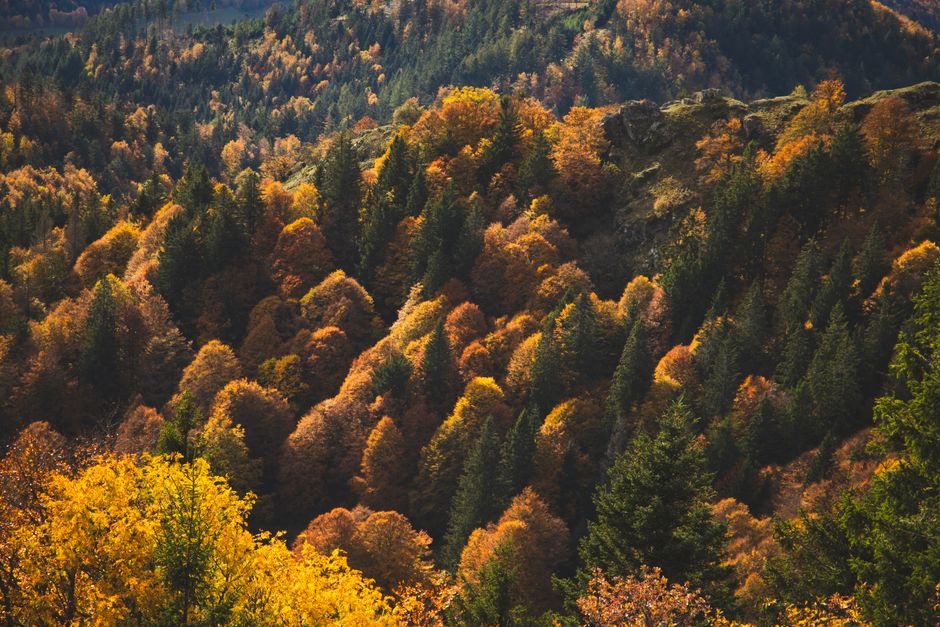
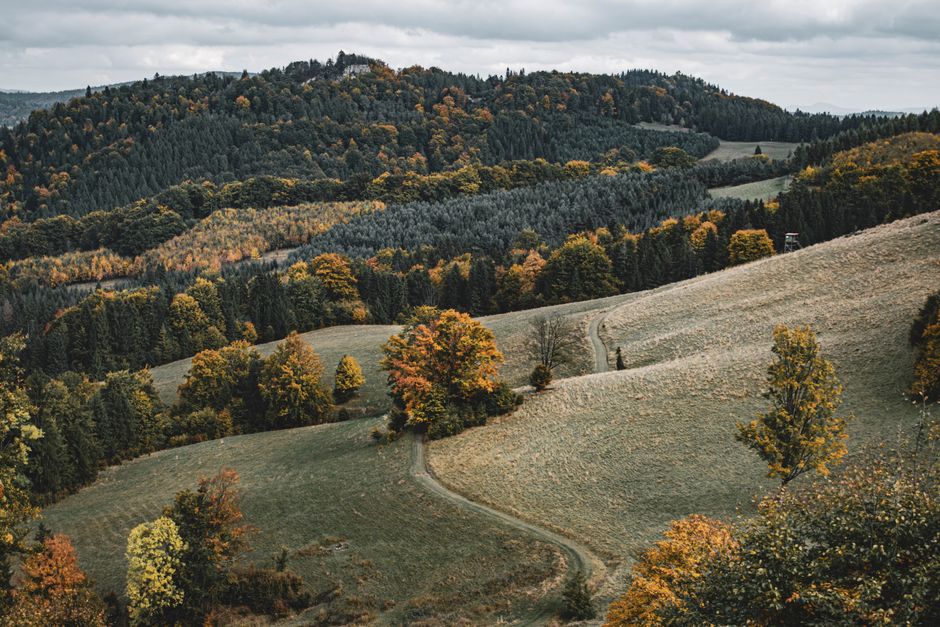
The strongest answer is from late September through early November, but the timing depends on elevation. The Black Forest is not one giant park with one peak foliage weekend. Vineyards and river valleys near Freiburg can still look summery in late September, while higher areas around the northern ridges and Hochschwarzwald may show yellow larches, copper beeches and bare branches several weeks earlier.
How the season changes by elevation
In late September, the lower valleys are usually the safest choice for mild walks, outdoor cafés and vineyard scenery. Early October often gives you the best balance: enough colour in the hills, reasonable daylight and fewer signs of winter at higher viewpoints. By late October, the forest can look more dramatic, but fog, rain and early darkness become bigger factors. In early November, some paths feel quiet and atmospheric; others feel stripped of their leafy canopy.
Do not plan around a single photograph from social media. Check recent local trail reports, webcams and weather forecasts a few days before departure. The official regional nature information is a useful starting point, but conditions on the ground still matter more than a calendar date.
What autumn weather actually feels like
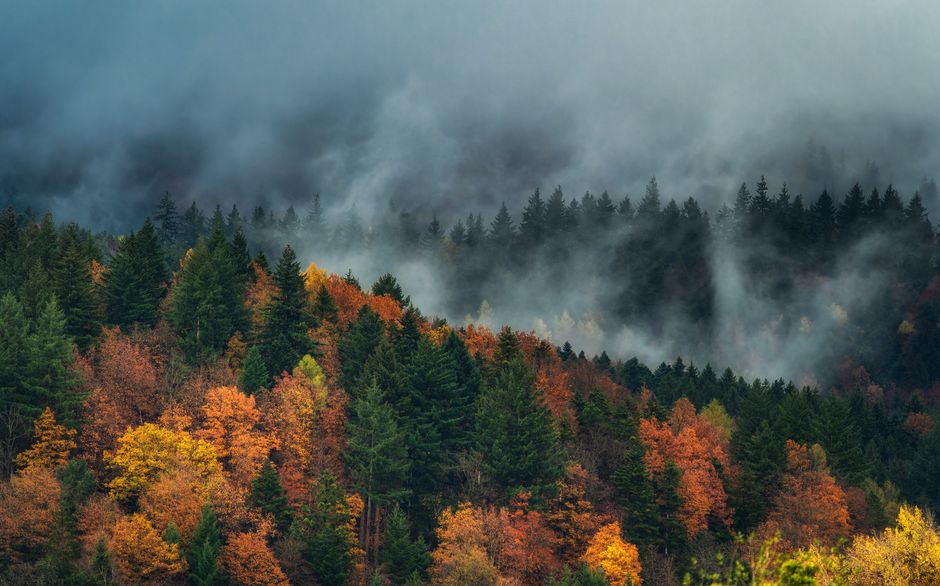
Autumn temperatures can change sharply between Freiburg, a lakeside town and a high ridge. A sunny morning may turn into cold mist after lunch. Wet leaves make roots and stone steps slippery, and a calm forecast in the valley does not guarantee clear views above it.
Build each day around one outdoor priority and one indoor or town-based backup. If the ridge disappears into cloud, spend the afternoon in a historic village, a museum or a café rather than forcing a viewpoint that will show nothing. The clear verdict: early to mid-October is the best all-round window for first-time visitors, while late September suits gentler valley days and November suits travellers who prefer quiet trails to bright foliage.
How should you plan a three-day Black Forest autumn itinerary?
A useful route moves from city to lake to forest village. That sequence gives you transport flexibility and prevents the trip from becoming a string of long drives between viewpoints.
A balanced three-day route
| Day | Base | Morning | Afternoon | Evening |
|---|---|---|---|---|
| 1 | Freiburg | Old Town and market square | Schlossberg or a nearby low-elevation walk | Local Baden-style meal in the city |
| 2 | Titisee or Schluchsee | Regional train or bus journey into the uplands | Lakeside walk, forest trail or viewpoint if clear | Early dinner and weather check for day three |
| 3 | Triberg and Gutach | Waterfall area or a marked forest route | Open-air heritage museum or village visit in Gutach | Return via the Schwarzwaldbahn route |
How to keep the route workable
Freiburg makes a sensible first base because it gives you urban food, museums and a quick escape to the hills. Titisee is easy to recognise, but it can feel busy at popular times; Schluchsee is the better choice for a longer, quieter lakeside walk. Triberg adds the classic waterfall-and-forest experience, while Gutach gives the day more cultural depth.
Use the official Schwarzwaldbahn route information for the rail corridor through places such as Hausach, Hornberg and Triberg. Confirm departures on the actual day because engineering work, seasonal services and disruptions can change the smoothest-looking plan. The best itinerary is not the one with the most stops. It is the one that still works when a connection is late or a trail disappears into fog.
What should you pack for an autumn walk?
Pack for wet ground, not for the photograph you hope to take. That single decision prevents most uncomfortable days in the Black Forest.
The practical packing list
- Waterproof walking shoes with a sole that grips mud, roots and uneven stone.
- A light waterproof shell, even when the morning forecast looks clear.
- One warm mid-layer for exposed viewpoints and evening walks.
- A small headlamp because daylight fades quickly in forest valleys.
- Offline maps and a charged phone; wooded areas can weaken mobile coverage.
- Water and a simple snack for routes that pass through few open businesses.
- Small cash for rural cafés, lockers or services that may not accept every card.
- A reusable bag for wet layers and muddy footwear on the journey back.
Three mistakes that create avoidable problems
- Starting too late. Autumn daylight is shorter, and a route that feels easy at noon can become stressful after the last bus.
- Trusting distance alone. A short trail with steep steps, wet roots and repeated climbs may take longer than a longer valley path.
- Leaving the marked route for a better photograph. Forest edges can hide steep drops, private land and unstable ground. Stay on signed paths and follow local closures.
Wear layers you can remove while climbing and put back on when you stop. Bring a paper backup of your route if the walk matters to your day. For most visitors, careful footwear and a flexible schedule matter more than specialist hiking equipment.
Which Black Forest bases work best for different travellers?
There is no single perfect base. The right choice depends on how much time you want to spend moving and how much you care about evening atmosphere.
Is Freiburg best for a first visit?
Yes, if you want the easiest mix of city life, transport and nearby nature. Freiburg works well for a short trip because rain does not ruin the day: you can explore the Old Town, walk up Schlossberg or use public transport towards the hills. It is also the strongest base for travellers who do not want to drive every day.
Should you stay near a lake or in a forest village?
Choose Titisee or Schluchsee if your priority is water, open views and simple walking routes. Choose Triberg, Gutach or another forest village if you want deeper woodland, traditional architecture and a quieter evening. Lakeside locations can feel busy during the day, while small villages may have fewer late dining choices. Check the final bus or train before setting off, especially on Sundays and during shoulder season.
What should you avoid on an autumn Black Forest trip?
Do not treat the Black Forest as a checklist of famous stops. The region rewards slower planning, and the most common failure is trying to combine Freiburg, a lake, Triberg, Baden-Baden and a ridge walk in one rushed circuit.
When the classic plan goes wrong
Driving between too many locations leaves little time for the places that make the trip distinctive: a bakery in a village, a quiet stretch of woodland, a local museum or a meal that lasts longer than expected. Rain creates a second problem. A route built around panoramic viewpoints has no replacement when cloud covers the summit.
Do not assume every attraction operates on a summer schedule. Small museums, chairlifts, tourist offices and rural restaurants may change their hours outside peak season. Check the same day or the evening before. Keep one low-level walk and one indoor stop in reserve.
The short verdict
- Best for vivid foliage: early to mid-October, with flexibility across different elevations.
- Best for quiet trails: late October or early November, accepting shorter days and less predictable weather.
- Best for public transport: Freiburg as a base, using rail and buses for selected day trips.
- Best for a slower countryside stay: a lake or forest village after one night in Freiburg.
- Worst approach: filling every daylight hour with distant stops and leaving no plan for rain.
The Black Forest in autumn is at its best when the itinerary has a little empty space. Leave room for a misty detour, a late lunch or a trail that deserves another half hour. That is how the region becomes more than a collection of viewpoints.