The Eternal Tug-of-War: Ocean Waves vs. Mountain Peaks
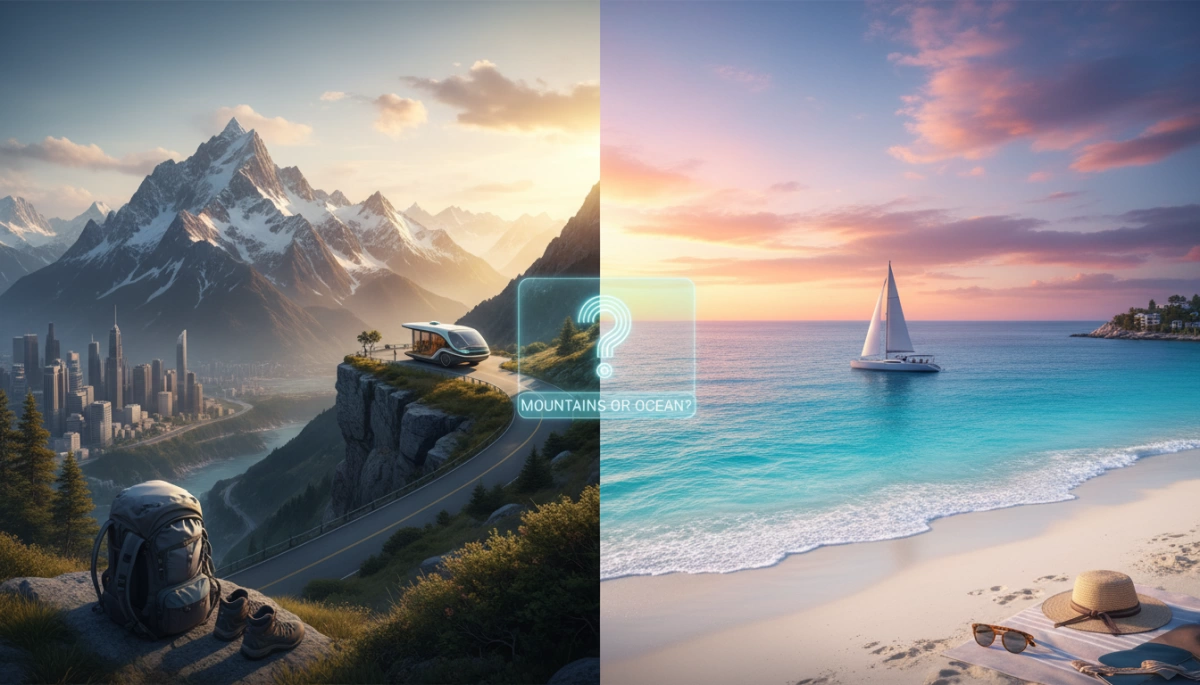
Ever find yourself torn between the calming rhythm of ocean waves and the grounding silence of mountain peaks? You’re not alone. This is a classic dilemma for many travelers searching for the perfect escape from today’s fast-paced world. Both the coast and the mountains offer powerful ways to unplug—whether it’s the gentle sway of the tides or the quiet embrace of alpine forests.
Choosing between these two amazing options isn’t just about picking a vacation destination; it’s about matching what your mind and body truly need right now. Are you craving the “Blue Mind” serenity that comes from water? Or do you feel drawn to the healing effects of forest bathing and high-altitude fresh air?
This guide isn’t just a list of places to visit. Instead, we’ll dive into the psychological impacts, health benefits, and travel goals that make mountains and oceans so compelling. By the end, you’ll feel confident deciding which escape fits your personality, lifestyle, and well-being best. So, let’s unravel this never-ending dilemma together and find where your next adventure or relaxation spot lies.
The Case for the Coast: The “Blue Mind” Effect
There’s real science behind why being near water feels so calming. The Blue Mind theory shows that oceans and seas put our brains into a meditative, relaxed state. Just watching waves or hearing their steady rhythm can lower stress and boost mental clarity.
Key Benefits of Coastal Living
| Benefit | Explanation |
|---|---|
| Thalassotherapy | Salt water and sea air help soothe skin, boost circulation, and reduce inflammation. |
| Rhythm & Rest | The natural sound of waves can improve sleep quality by regulating your body’s internal clock. |
| Vitamin D Boost | Sunlight on open beaches increases mood-enhancing vitamin D levels, lifting spirits naturally. |
The Coastal Vibe
Beaches are sensory-rich and social—think the smell of sunscreen, the warmth of the sun, the feel of soft sand between your toes, and the lively buzz of fellow sun-seekers. It’s the ideal scene for total decompression, especially if you’re looking to unwind fully.
Perfect For
- Travelers wanting a low-stress, restful break
- Families with young children who need safe, open spaces
- Sun-lovers craving warmth and bright days
For those who want a break filled with easy-going vibes and seaside relaxation, the coast offers a unique kind of nature therapy for stress that’s hard to beat.
The Case for the Summit: The “Green Space” Advantage
Spending time in the mountains offers a unique kind of nature therapy for stress, largely thanks to the concept of forest bathing or Shinrin-yoku. This Japanese practice of immersing yourself in green spaces promotes grounding and mental clarity by connecting you with the natural environment.
Key Benefits of Mountain Retreat Solitude
| Benefit | Description |
|---|---|
| Active Recovery | Hiking, climbing, and altitude training boost fitness and stamina. |
| Cooler Climes | Escape the heat with crisp, fresh air that refreshes both body and mind. |
| Solitude & Perspective | Vast, rugged landscapes invite introspection and provide new mental outlooks. |
The cooler temperatures and thinner air challenge your body in healthy ways, encouraging endurance and longevity, a well-known high altitude health effect. Mountains also offer a break from the noise and crowds, perfect for those wanting to disconnect from technology and everyday distractions.
The Mountain Vibe
- Adventurous and rugged
- Quiet, introspective spaces
- Cozy cabins with fireplaces to wind down after a day outdoors
Ideal For
- Introverts craving solitude
- Adventure junkies seeking physical challenges
- Anyone needing a mental reset far from busy seaside relaxation spots
For those interested in combining adventure travel ideas with peaceful surroundings, mountain retreats provide unparalleled benefits unmatched by coastal living.
If you’re curious about destinations that offer a mix of such experiences, consider exploring detailed travel plans like how to spend one day in Piha, blending active outdoor time with serene moments.
Head-to-Head Comparison: Logistics and Reality
When it comes to coastal living vs alpine living, the practical side can tip the scales. Here’s a quick breakdown of what you’re really signing up for.
| Aspect | Ocean | Mountain |
|---|---|---|
| Activity Levels | Surfing, swimming, lounging—often low cardio unless you’re hitting water sports | Hiking, skiing, climbing—usually more intense physical exertion, great for active recovery |
| The “Hassle” Factor | Sand everywhere, humidity, crowds and noise can be an issue | Unpredictable weather, bugs, possible altitude sickness, sometimes tough accessibility |
| Packing & Prep | Minimalist—swimwear, light clothes, sunblock | Gear-heavy—layers, sturdy boots, backpacks, sometimes specialized equipment |
If you’re into beach vacation activities, you can balance downtime with energetic water fun, but expect sand in all your gear. For mountain retreats, like the kind you might find in detailed guides for climbing or hiking spots such as the Belfry of Bruges or Harder Kulm, gear and weather prep are key.
Understanding this helps you realistically plan your trip based on your energy levels, tolerance for inconvenience, and what kind of nature therapy you’re after.
Personality Match: Who Are You Really?
Choosing between mountains and ocean often comes down to your personality and what you really need from a getaway. Are you more of an extrovert or an introvert? Beaches tend to attract social butterflies who love the lively, sensory-rich environment—everyone’s chatting, kids are playing, and there’s a buzz in the air. On the other hand, mountain retreats cater to introverts or anyone craving solitude, where the quiet and vast landscapes offer a break from constant stimulation and a chance for deep reflection.
Then there’s the “Doer” versus “Be-er” mindset. If you thrive on achievement and adrenaline, climbing peaks or tackling rugged trails aligns perfectly with your goals. The mountains offer active recovery, fresh air, and mental clarity through physical challenge. In contrast, if you’re someone who prefers to relax and surrender to the rhythm of nature—falling into the meditative “Blue Mind” state by the seaside—then the ocean’s soothing waves and warm sunshine are your calling.
Your current life stage matters too. If you’re feeling burned out, exhausted by fast-paced living, a beach vacation with its thalassotherapy benefits and restorative vibes might be exactly what you need. For those searching for inspiration, perspective, or a reset in creativity, the mountains—with their “forest bathing” benefits and refreshing altitude—can provide a powerful mental reboot.
Understanding these personal factors helps cut through the “coastal living vs alpine living” debate, pointing you to the choice that will best recharge your mind and body.
The Compromise: Where Earth Meets Water
If you can’t decide between the mountains and the ocean, why not have both? Some incredible destinations combine coastal living and alpine vibes, offering the best of both worlds. Think Big Sur’s dramatic cliffs crashing into the Pacific, Cape Town’s stunning beaches backed by Table Mountain, Hawaii’s lush volcanic peaks rising from the sea, or the Pacific Northwest where fjords meet forested slopes.
These hybrid spots provide a perfect balance of seaside relaxation and mountain retreat solitude. You can enjoy thalassotherapy benefits from the sea air and salt water, then switch gears to experience forest bathing benefits and active recovery high up in the hills. It’s a dream setup for travelers who want varied vacation experiences without the fear of missing out (FOMO).
For those planning a trip that satisfies both rest and adventure, exploring destinations like these ensures you don’t have to choose. They cater to vacation styles ranging from eco-tourism to adventure travel ideas, perfect for those wanting to immerse themselves in nature therapy for stress relief while enjoying the stimulation of diverse landscapes.
The Decision Matrix: Finding Your Fit
Ready to decide if mountains or ocean suit you best? Here’s a quick interactive checklist to pinpoint what fits your style:
- What’s your primary goal?
- Rest & decompression: Lean toward coastal living with its proven seaside relaxation benefits.
- Adventure & challenge: Mountains offer hiking, climbing, and a mental reset with forest bathing benefits.
- How do you handle heat?
- Love the sun? The tropical climate and Vitamin D boost of the coast are perfect.
- Prefer cooler temps? The cooler climes of alpine living and crisp mountain air might suit you better.
- Who’s in your travel crew?
- Family with kids or social groups? Beaches offer a laid-back vibe with plenty of activities and easy logistics.
- Solo travelers or introverts? Mountain retreats provide solitude and mental clarity away from crowds.
- What’s your budget?
- Generally, coastal destinations can be pricier due to demand and amenities. Mountain trips may require investment in gear but might offer more affordable accommodation options.
Answering these questions will guide your vacation destination planning and help you weigh the mental health benefits of nature tailored to your needs. For a taste of nature therapy for stress, explore unique coastal spots like Castlepoint, New Zealand, blending stunning sea views with tranquil escapes.