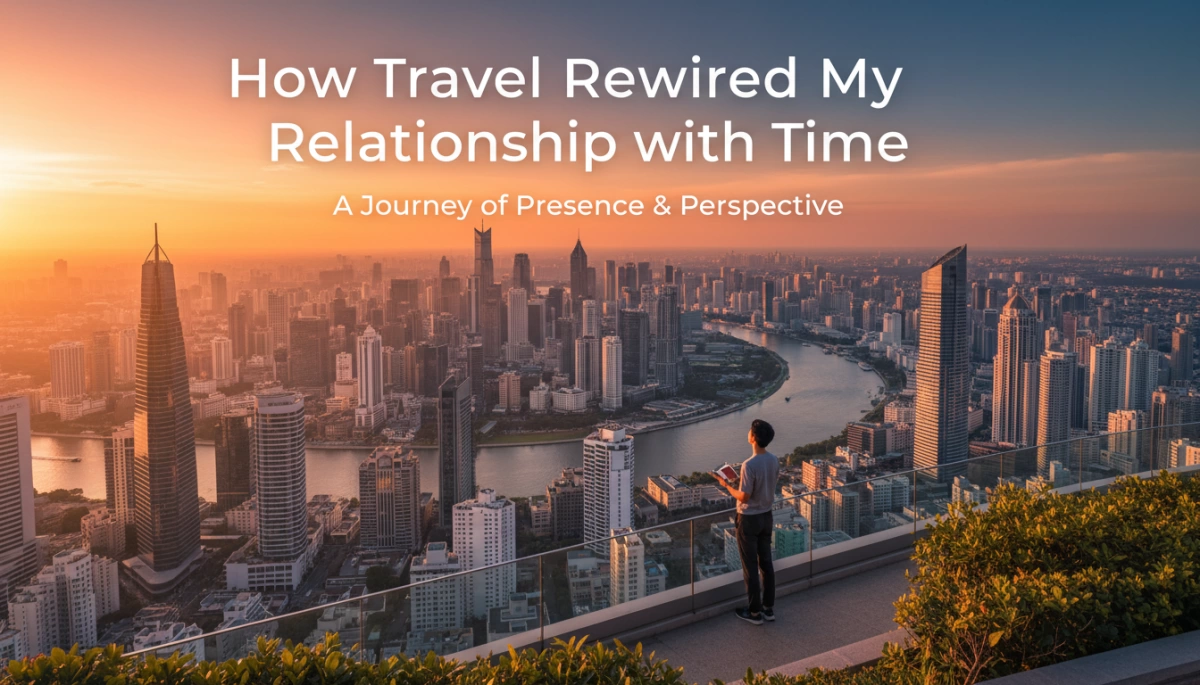
The Trap of the Ticking Clock
Have you ever felt like your days are ruled by an endless to-do list, where every second is scheduled and productivity anxiety lurks around every deadline? That constant pressure to be “on,” to always deliver more, can make time feel like a relentless ticking clock—rigid, unforgiving, and exhausting. Modern life often traps us in this cycle, where the value of time is measured by how much we accomplish rather than how we experience it.
Before travel rewired my relationship with time, I was caught in this exact trap. My days were packed with back-to-back meetings, emails, and tasks designed to maximize productivity but left me drained and disconnected. I craved the freedom to slow down but couldn’t escape the anxiety that came from unstructured moments.
The breaking point was unmistakable: burnout crept in, sapping my joy and creativity. I realized that the rat race wasn’t sustainable. This desire to escape wasn’t just about a vacation; it was a deep need to find a new way to relate to time itself.
Travel became the catalyst for this shift. By stepping out of my hectic routine, I encountered different cultures and rhythms that challenged my obsession with the clock. It slowly rewired my understanding—from viewing time as a strict deadline to experiencing it as something elastic, rich, and deeply personal. This journey wasn’t just about geography; it was about reclaiming time and mental health through the slow travel movement and mindful exploration.
In the next sections, I’ll share how travel transformed my sense of time, proving that sometimes, to own your minutes, you need to lose the stopwatch.
The Initial Shock of Unstructured Time
When I first stepped off the well-trodden path of my daily routine, the lack of a packed schedule threw me off balance. That initial detox from constant productivity triggered a wave of anxiety — what do I do with all this unstructured time? This is a common travel detox symptom, especially for those used to the relentless pace of modern life.
But as hours stretched without a strict plan, I began to notice something freeing in the so-called “mañana” culture found in many parts of the world. Here, time is more relational — people prioritize moments with others over rushing to the next task. It’s a sharp contrast to the ticking clock mindset that governs much of our lives.
Adapting to this slower rhythm meant surrendering control, especially when travel itineraries inevitably broke down. Missed buses, delayed tours, and unexpected detours taught me to embrace spontaneity. Letting go of rigid plans opened the door to mindful exploration and deeper present moment awareness.
This shift reflects key lessons from slow travel movement and cultural differences in time perception. Embracing unstructured, even broken time felt like a mental reset, helping me escape burnout and appreciate the art of doing nothing — also known as Niksen — in practice.
For more on how travel reshapes daily rhythms, check out guides on how to spend 10 days in Porto for a taste of relaxed European time, or practical tips on visiting Mount Tibidabo, which highlight experiences that celebrate being over rushing.
The Science of Novelty
There’s an odd paradox when it comes to travel: vacation time often feels much longer than the same number of days spent at home. This isn’t just in your head. The psychology of time perception explains this through neuroplasticity—the brain’s ability to rewire itself. New experiences trigger fresh mental pathways, making your mind more alert and aware. When you’re outside the autopilot of daily routine, time seems to stretch because you’re truly present and noticing details that usually go unseen.
This effect is why mindful exploration—being fully engaged with your surroundings—can break the repetitive cycle of stress and productivity anxiety. Instead of counting minutes or rushing through tasks, you slow down and let the moment unfold. The slow travel movement embraces this idea, highlighting how novelty recalibrates our sense of time, helping you escape burnout and rediscover balance.
If you want to begin practicing this mindset, consider spontaneous travel itineraries that allow flexibility, or even mini-adventures like a day exploring off-the-beaten-path spots. For example, how to spend one day in Piha reveals how embracing new landscapes can deepen your awareness and reset your internal clock.
Kairos vs. Chronos: Quality Over Quantity
Understanding time starts with two ancient Greek concepts: Chronos and Kairos. Chronos is the clock time we all know—seconds ticking down, schedules to keep, deadlines to meet. It’s quantitative, measurable, and often tied to productivity anxiety. On the other hand, Kairos represents qualitative time—the moments that feel full, meaningful, and alive. It’s not about how much time passes but how deeply you experience it.
Travel rewired my relationship with time by shifting my focus from Chronos to Kairos. Instead of stressing over every minute mapped out, I learned to embrace those perfect moments on the road—the spontaneous interactions, a sunset that slows everything down, or a quiet pause on a busy street. This shift helped me value the present moment awareness so crucial to mental health and burnout recovery.
Living in Kairos means experiencing time as something to live through, not just manage. It’s about slowing down and tuning in, much like the slow travel movement encourages. By prioritizing quality over quantity, travel showed me how time could be elastic and abundant, not scarce and frantic. These insights are key for anyone looking to escape the rat race and build better work-life balance strategies.
If you want to see this in action, exploring places like Canterbury offers a perfect way to practice mindful exploration—where every moment counts beyond the clock.
The Art of Waiting
Travel taught me a surprising lesson: waiting doesn’t have to be wasted time. Instead of seeing delays or downtime as frustrating “dead time,” I learned to reframe these moments as chances to pause and reflect. This shift helped me step into a slower, more mindful exploration of my surroundings.
When stuck waiting—whether for a late bus, a delayed meal, or a spontaneous itinerary change—I switched to observation mode. I started appreciating small, often overlooked details: the way local light hits a street corner, snippets of conversation in another language, or the rhythm of life in a park. These moments of quiet noticing brought a new sense of joy and presence.
Most importantly, travel ended my constant rush. The death of urgency became clear as I realized how few things actually demand immediate action. This insight changed how I relate to time itself, loosening the grip of anxiety and giving space to be fully present. It’s a reminder that sometimes, the best way to own your time is to simply wait—and savor that stillness.
Bringing It Home: The Re-entry Challenge
Coming back from travel, especially after experiencing slower, more mindful rhythms, hitting fast-paced life can feel jarring. The buzz of constant notifications, packed schedules, and productivity pressure pulls you right back into the cult of busy. Re-entry is tough but doable—it’s about holding onto the travel lessons and reshaping your daily life.
Actionable Micro-Habits to Keep That Travel Calm
- Create Unstructured Time: Just as on the road, carve out small pockets in your day with no agenda. This lets your mind wander, helps reduce burnout, and reconnects you with present moment awareness.
- Prioritize Experience over Tasks: Rather than rushing through your to-do list, focus on moments worth savoring—like lunch with friends or a walk in the park. This shift aligns with the slow travel movement and keeps you grounded.
- See Through Tourist Eyes: Approach your everyday surroundings with curiosity. Notice details you’d usually overlook; this mindful exploration keeps your brain engaged and refreshes daily routine.
Setting Boundaries Against Busyness
Saying no becomes a radical but necessary step. Protect your time by:
- Limiting after-hours work communications
- Declining unnecessary meetings or commitments
- Scheduling intentional breaks for doing nothing—the art of Niksen, a proven burnout recovery method
Bringing travel’s perspective into your work-life balance strategies helps you resist the urge to rush and opens space for more meaningful living.
For inspiration on embracing slower, culturally rich experiences even in weekend getaways, check out this guide on how to enjoy a weekend in Bruges with fresh eyes and unhurried time.
By weaving these habits into your routine, you start owning your time with intention, turning minutes into moments that matter.
Owning Your Time
Travel taught me that time isn’t just a rigid schedule—it’s elastic and deeply personal. How we experience minutes depends on our mindset and what we choose to focus on. Instead of chasing productivity or rushing through life, we can decide to inhabit each moment fully. This shift from seeing time as something to manage, to something to live, is at the heart of mindful exploration and intentional living.
To start owning your time, consider small changes like taking micro-trips or weekend disconnects. These breaks from the usual hustle help reset your perception of time, giving space for presence and mental clarity. Whether it’s a spontaneous itinerary or simply slowing down during a day trip, these moments stretch your experience of time and reconnect you with Kairos—the qualitative “right time.” If you want practical ideas, exploring a weekend getaway like a weekend in Logroño, Spain can show you how travel rewires your relationship with time in refreshing ways.
Owning your time means setting boundaries to say no to constant busyness. It’s about choosing how to spend your minutes rather than letting the clock dictate your life. In this way, travel isn’t just a break from routine—it’s a blueprint for living more intentionally and escaping the rat race for good.