Bruges, known locally as Brugge, is an historic city in Belgium. The city is famous for its well-preserved medieval architecture, canals, and cobbled streets, which have earned it the nickname ‘Venice of the North’ and make a weekend in Bruges a popular choice for many.
Bruges was an important centre of trade and commerce in the Middle Ages, and the many impressive buildings and monuments that have survived to this day give visitors just a hint of the city’s history. In fact, Bruges was designated a UNESCO World Heritage site in 2000 in recognition of its cultural and historical significance.
Bruges is a popular city break destination, attracting millions of visitors each year who come to explore the winding streets, picturesque squares, churches and canals. Plus, come winter time, the Christmas markets that pop up attract even more to see the city looking its finest all festive and lit up.
Where is Bruges?
The city of Bruges sits in the northwest of Belgium, an hours train ride from the capital city of Brussels. It’s conveniently located for car and rail access from mainland Europe, and for access via sea from the nearby port town of Zeebrugge.
Top Sights to See in Bruges
There’s plenty to see and do on a weekend in Bruges, but some sights are ‘must see’ and should make any visitor’s list for the city.
- The Historic Centre of Bruges – The UNESCO World Heritage Site is known for its beautiful medieval architecture and picturesque canals, an absolute must see!
- The Belfry of Bruges – the impressive bell tower taking pride of place in the Grote Markt.
- The Church of Our Lady – A stunning Gothic church housing several important works of art, including a sculpture of the Madonna and Child by Michelangelo.
- Top museums – The Frietmuseum, Chocolate museum and Groeningemuseum have a little something for everyone
- Grote Markt – The central cobblestoned square in the heart of the city. .
- The Begijnhof – A former convent that now serves as a tranquil retreat from the bustling city.
- The Minnewater – A charming lake surrounded by picturesque trees and gardens and is a popular spot for a leisurely stroll or, come Christmas, a leisurely skate on the ice rink.
- Breweries – What’s a visit to Belgium without sampling the beer?
How Long to Spend in Bruges
Bruges is the perfect day trip option if you’re limited on time, but if you’ve got the weekend to spend in the city then 2 days in Bruges is a great opportunity to really soak up the place and indulge in the waffles and coffee on offer in so many charming cafes.
How to Spend a Weekend in Bruges
Day 1 – Exploring the Centre of Bruges
With so much to see and do in the centre of Bruges, it’s a great idea to start your Bruges city break focussing on this area.
Grote Markt
The biggest attraction in the city is probably Grote Markt. It’s slap bang in the centre of the city, full of history and home to the impressive Belfry Tower, provincial court and a generous offering of cafes and restaurants. The cobblestone square has been the centre point of life in Bruges for hundreds of years, and was renovated in the mid 1990’s to reduce the amount of traffic passing through.
Belfry Tower
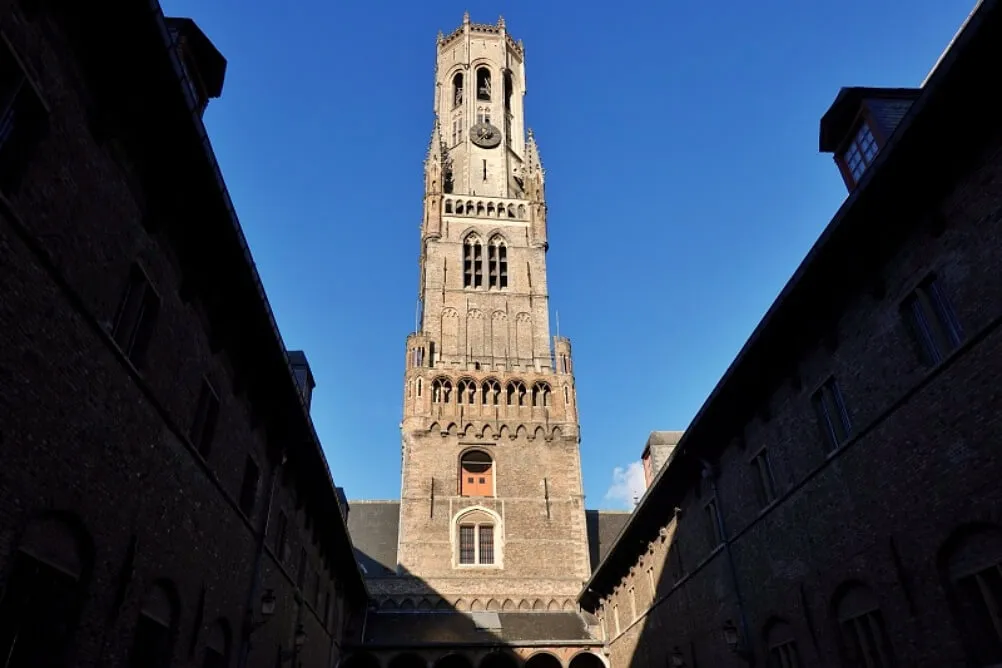
The impressive bell tower is a well known landmark in Bruges, and used to play a key role in the lives of the residents of Bruges using the bells to communicate things like start of work day, celebrations, and also danger like fire or invasions.
These days the Belfry Tower is mostly just a landmark and tourist attraction. Visitors can climb the 366 steps of the Belfry Tower, and even if you just pass near Grote Markt you’ll likely hear the bells ringing. They ring for some time, and usually play a number of different songs through the day.
Shopping
The area around Grote Markt is great for shopping. Head to Steenstraat for a whole street of shopping, both international and local shops. Spend time wandering the smaller streets that branch off from there, or for a charming shopping alley visit Winkel Galerij which you’ll find in a very modest entrance next to Bubbles at Home on Wollestraat.
Burg Square
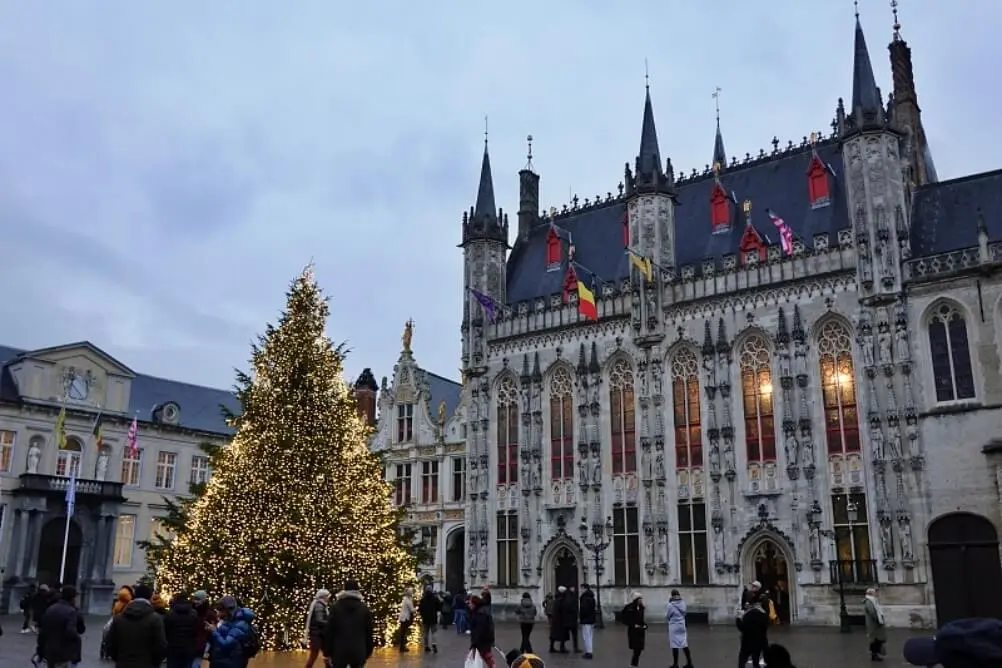
Smaller than Grote Markt but still worth a visit. At Christmas there’s a huge tree taking centre stage, and the surrounding buildings have stunning architecture to check out. You’ll find the City Hall here, as well as the Basilica of the Holy Blood. Brugse Vrije is another building to check out just next to the city hall, with a history as a courthouse from the 1700s, now welcoming visitors as a museum.
The cobble stone square also plays host to a weekly food market offering fresh fruit and vegetables, meat, cheese and cooked dishes too.
City Hall
Taking pride of place in Burg Square, Bruges’ city hall dates back to the 1400s. The exterior is architecturally stunning and some say it was an indication of the wealth and prosperity of the area when it was built, but once you step inside you’ll be even more wowed. Aside from being somewhere to admire the decor, there are exhibitions inside to share the history of Bruges with visitors.
Basilica of the Holy Blood
One of several churches to check out on a Bruges city break, the Basilica of the Holy Blood is worthy of a visit for a few reasons. The first is that it’s noteworthy for being different to the other churches in Bruges. Instead of being a standalone building in the shape of a cross as we’d expect, it’s built into the buildings surrounding Burg Square. The entrance is unassuming, and once you follow the stairs up to the church, you’re greeted with a modest sized chapel.
Aside from the location, the name gives a huge clue to the key ‘attraction’ at this church. It claims to have a vial of Jesus’ blood, which is brought out for visitors to pass by at certain times of the day. There is indeed a vial, but it’s not the kind or as full as when you have blood taken. Still, it’s quite an experience for those who follow the faith, and it’s interesting to see for those who don’t.
Beer Experience
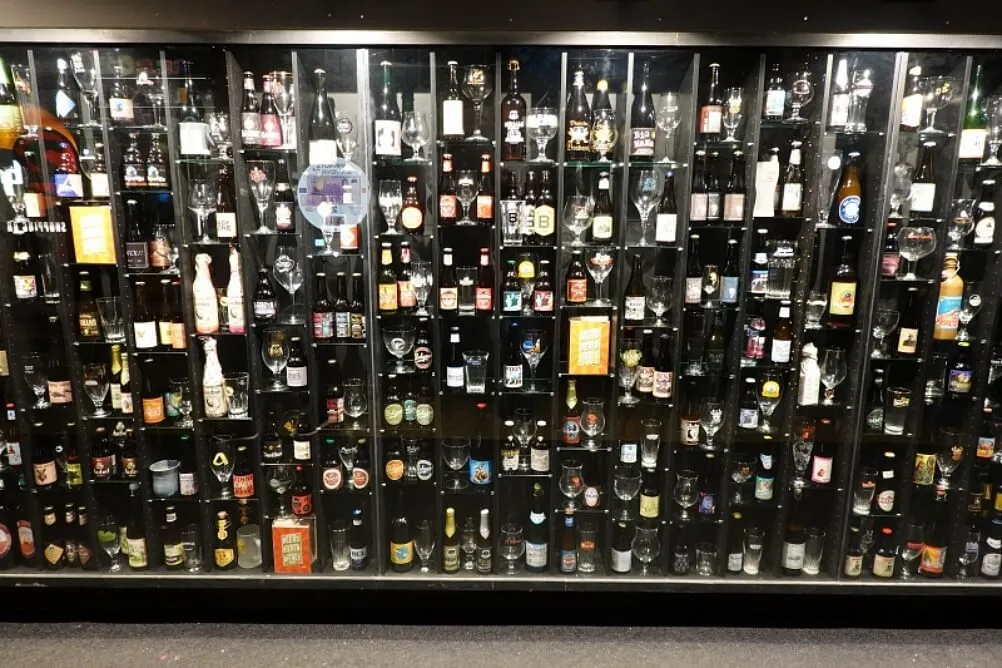
When in Belgium, right? In a country known just as widely for its beer as for its chocolate, a visit to a beer museum is a must on a weekend in Bruges. It’s not one of those stuffy experience museums though, instead it’s more interactive and engaging, and ends with a visit to the brewery bar where you can sample some of the beers you’ve just been learning about!
The bar is open for visitors even if you don’t want to go visit the whole beer experience.
Jan van Eyckplein
These days, the square is peaceful and a lovely spot to go for a walk, but back in its heyday this was a busy port for the city of Bruges. The buildings surrounding the canal would have been a hive of activity with people from countries all over the world trading.
Now, the square is home to a statue of the famous artist Jan van Eyck, and a bear hides in the facade of the nearby Poortersloge…a small game of hide and seek for visitors to find the bear of Bruges that has been in residence here since the 15th century. Legend says the Count of Flanders killed a bear in the woods near Bruges, and ever since it’s been a symbol of the city.
Pick a Museum
While there are plenty of museums to choose from in Bruges, two of the most popular ones to experience in the centre of Bruges are the Chocolate Museum, or the Frietmuseum. Two staples of Belgian cuisine and often sampled by visitors and locals alike, these museums give you the chance to learn a bit more about the two delicious treats!
Sample Some Chocolate!
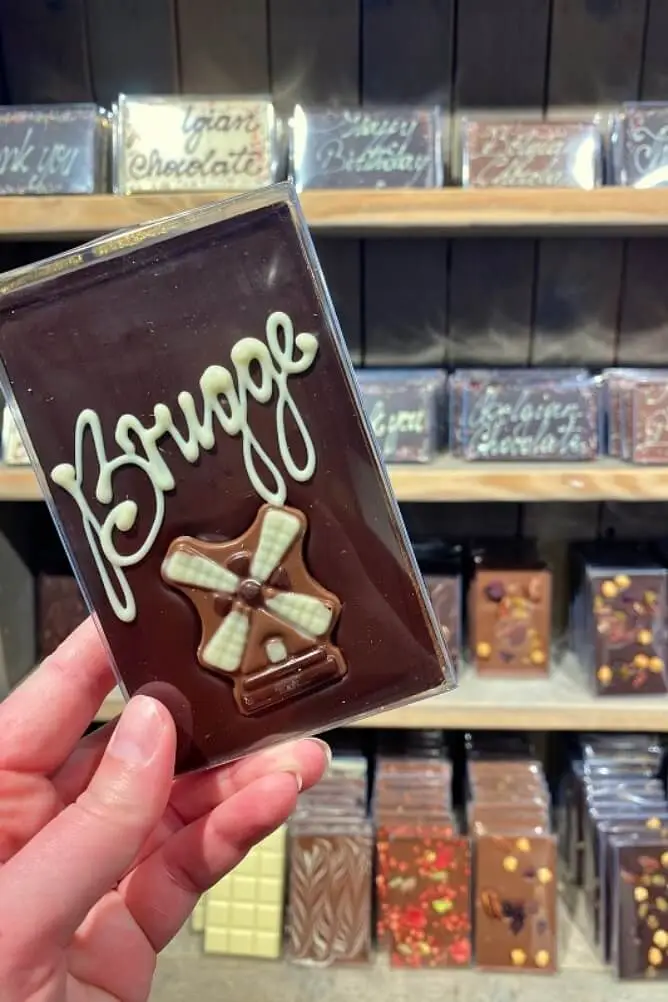
It’s not a proper Bruges city break without looking in at least one chocolate shop, and Chocolatier Dumon is a great choice. There are a few across the city, but the branch on Eiermarkt is close by today’s activities and really charming. The chocolates are hand made, the shop is cosy and despite being a chain there’s a homely feeling in the shop.
Don’t Forget the Christmas Markets…
For your fill of Christmas markets on this day, be sure to stop in at the Christmas market in Grote Markt for stunning surroundings and a backdrop of the Belfry Tower. For the foodies, the market in Simon Stevinplein is a must visit to fill your belly and warm your soul.
Day 2 – Explore Wider in the City
Having covered most of the central sights near Grote Markt on the first day in Bruges, the second day of a well spent Bruges city break is concentrated on exploring the rest of the small city.
Churches
With over 30 in the city, there are plenty of churches to check out in Bruges. Other than the Basilica of the Holy Blood mentioned before, there are two more noteworthy churches to check out.
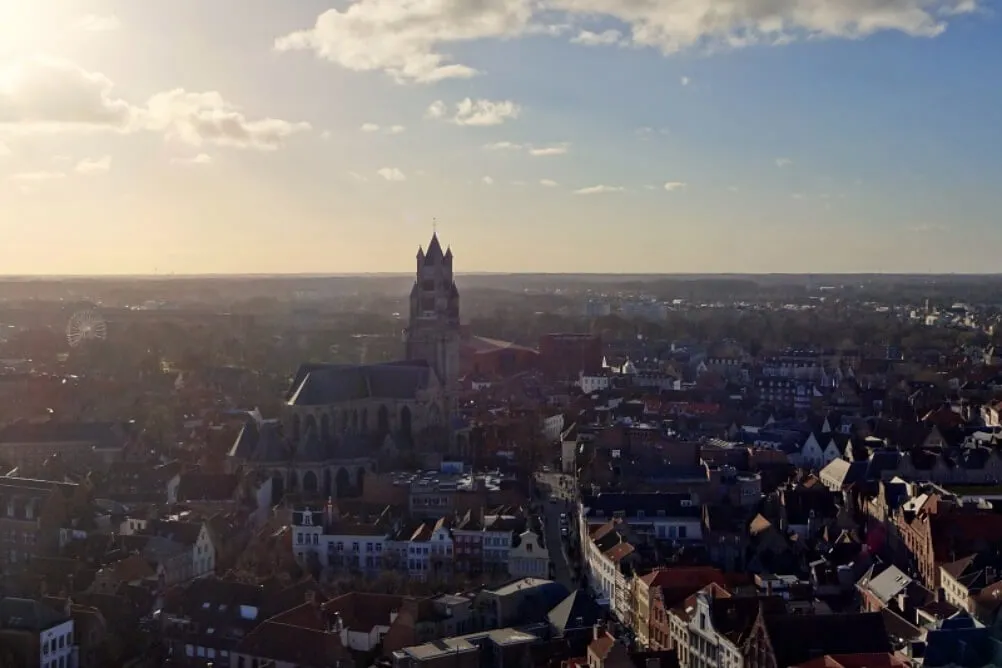
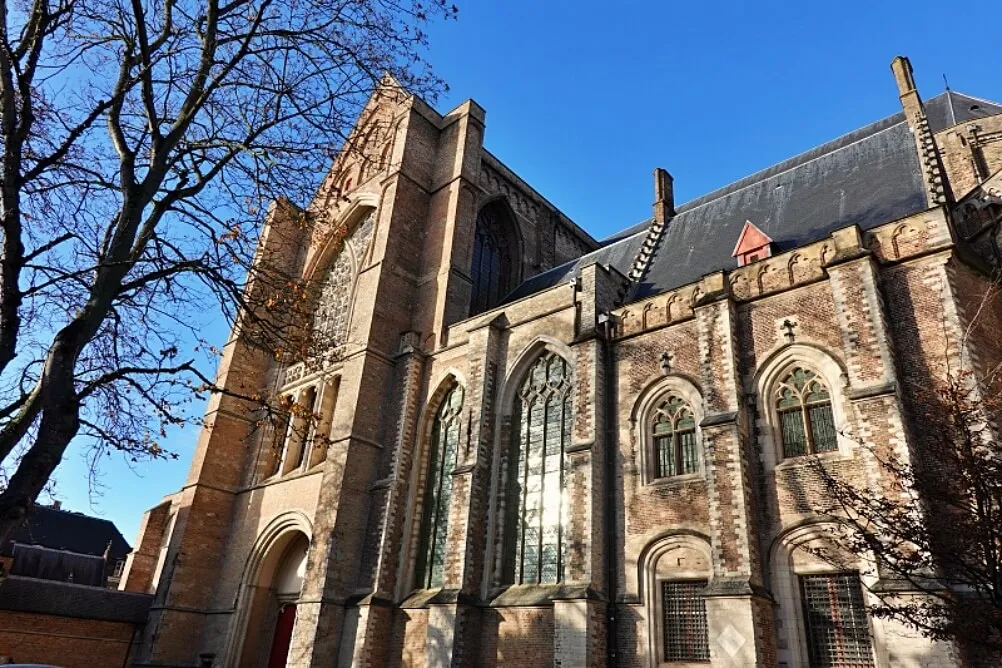
Sint-Salvatorskathedraal is Bruges’ cathedral, is also the oldest church in the city, and takes pride of place in the centre of Bruges. It’s an impressive sight and can be spotted from many places in the city. It’s free to visit during the set visiting hours, so there’s no pressure to spend ages there to make the most of the entrance fee.
For the art lovers, a visit to the Church of Our Lady – locally called Onze-Lieve-Vrouwekerk – is a must. The church itself is pretty and worth a quick visit, but it is also home to Madonna of Bruges, the first piece of art by Michelangelo to leave Italy. How often do you get to see a Michelangelo piece?
Boniface Bridge
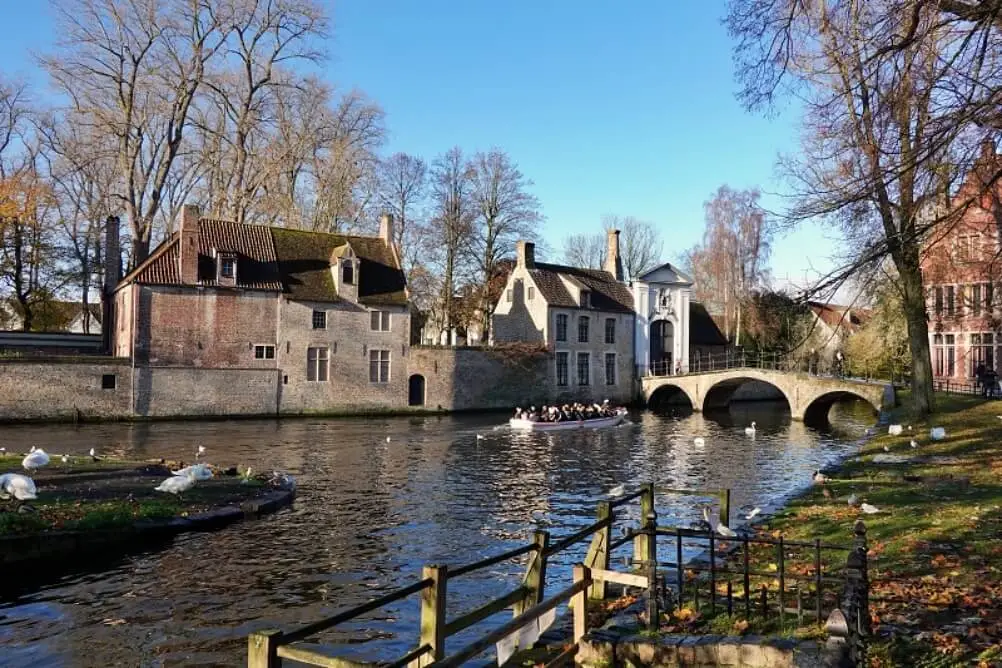
In a city full of canals and bridges, it takes something special to make a specific bridge worth visiting. But, Bonifaciusbrug is something special. It’s a small stone bridge, just behind the Church of Our Lady, and it has a real romantic vibe to it. The stone walls, the pretty views…it’s the perfect photo stop.
Begijnhof
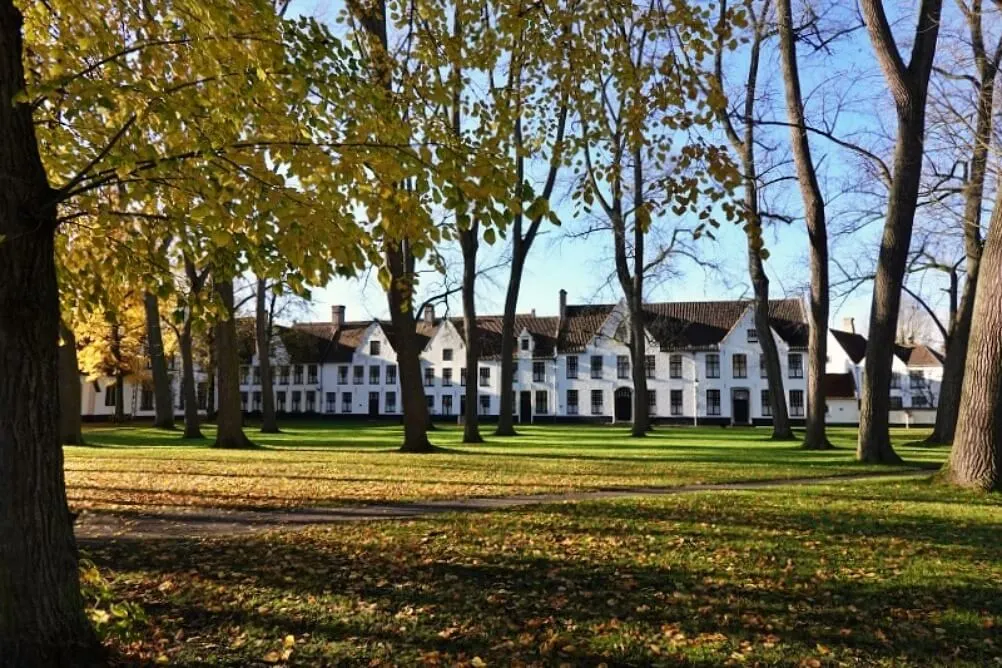
The Begijnhof complex is a tranquil haven from the rest of Bruges. A green courtyard surrounded by white buildings plays host to Begiunes, women who live as nuns but don’t usually take the vows to become fully official nuns. The Begijnhof in Bruges is open for visitors to respectfully explore and visit, and has a church and museum to share the knowledge and history of the site.
Canal Boat Tour
In a city with such gorgeous waterways, a canal tour in Bruges is a must do!
Many tours start from Rozenhoedkaai, which is conveniently thought to be one of the most picture perfect areas of the city, but there are five places around the city you can start your tour. Most last for 30 minutes and run from mid-March to mid-November with a select few running through the winter season.
Diamond Museum
Diamonds have a long history of being traded in Bruges, with evidence showing diamond polishers were in the city since the 14th century. The museum gives visitors an insight into the diamond trading history of Bruges before it moved to larger cities like Antwerp, and there’s even the chance to watch the daily show of diamonds being polished.
It should be noted this is a museum about the techniques and history of diamond trading and polishing in Bruges, and not a museum display of different diamonds.
Waffles
Bruges is famous for many things, but one famous culinary delight that should not be missed when visiting is the classic Belgian waffle. You’ll find many small cafes and street vendors selling these delicious treats, and they are the perfect snack to enjoy while exploring the city.
Belgian waffles are typically made with a light and crispy batter, and are served hot with an array of toppings. Fruit, chocolate, nuts, meat, breakfast…pretty much anything that fits can be enjoyed on top of a waffle!

Huisbrouwerij De Halve Maan
De Halve Maan is a brewery in Bruges that boasts a nearly 200 year history. When a place has been brewing beer for that long, you just know they know what they’re talking about. It might be the reason this was one of the things everyone recommended to me to do in the city!
A tour of the brewery gives visitors a chance to learn about the brewing process, sample some of the beer made at the brewery and also to soak up some stunning Bruges views.
Fun fact: De Halve Maan crowdfunded to be able to build a pipe that would send their beer from the brewery to their bottling plant without needing to use trucks over the charming cobble stone streets. Those who contributed to the cost of the pipe are rewarded with free beer!
Bruges Christmas Markets
What makes the cold weather and short daylight hours worth it? Christmas markets! And while Bruges isn’t chock full of markets, those it does have are worth a visit.
For the most impressive surroundings, the Christmas market in Bruges’ central square, Grote Markt, is your best pick. It has the slim, tall buildings surrounding the cobblestone square that are typical of Belgian historic architecture, and the Belfry Tower draws the eye from one side of the square. The Christmas market itself has everything you want from the markets: hot drinks, food, warm woolly clothes, cheese – yes, it deserves a special mention – and the usual arts & crafts.
For the foodies, the Christmas market just off Steenstraat in Simon Stevinplein is full of stalls offering delicious hot food, perfect for keeping warm in the cold weather! The bar at one end has some drinks not often seen at Christmas markets, and while I’m still not sure I enjoyed the gluhwein with amaretto, it sure warmed me up!
A firm favourite with Christmas market goers is an ice rink, and Bruges doesn’t disappoint! Just a little out of the city centre, Minnewaterpark hosts the city’s ice rink.
Got Extra Time? There’s More to See and Do!
Christmas markets aren’t the only ones Bruges has to offer. The city has a collection of food, weekend and flea markets to explore, each offering their own theme of goods to tempt shoppers.
You can also take a walk out to one of the old city gates – there are 4 still standing – to soak up a bit of Bruges’ history. While you’re there, how about trying to spot a windmill or two?
Where to Eat in Bruges
Restaurants, cafes and bars are very easy to find in Bruges. In fact, there are so many it can be hard to choose where to go! The usual rule of ‘move at least one street away from tourist hotspots’ applies, but if you really want to sit in the Grote Markt for a coffee and bite for breakfast, most places offer a coffee and croissant breakfast deal that is reasonably priced.
To enjoy a Belgian waffle while in Bruges, head to Kateijnnestraat where you’ll find more waffle cafes than you can shake a stick at! There are of course plenty across the whole city, but it seems that every second place on that street is a cafe offering delicious waffles of all kinds.
Visiting Bruges at Christmas means you have even more choice of to where to eat with all the Christmas market stalls. Is it cheaper to eat at the Christmas market stall than in a restaurant? Yep. Is it colder? Usually, yep. But worth it if you’re visiting Bruges on a budget or just like to sample the Christmas market goodies.
Aside from that, the world…well, city, is your oyster. There are hundreds of options all within a short walk of the central Markt square. If you really get stuck or just can’t choose, my favourite meal was at t’Brugs Pittahuis, absolutely delicious and very reasonably priced. I’d also recommend Carlito’s, an Italian restaurant that had a great vibe and super tasty options on the menu.
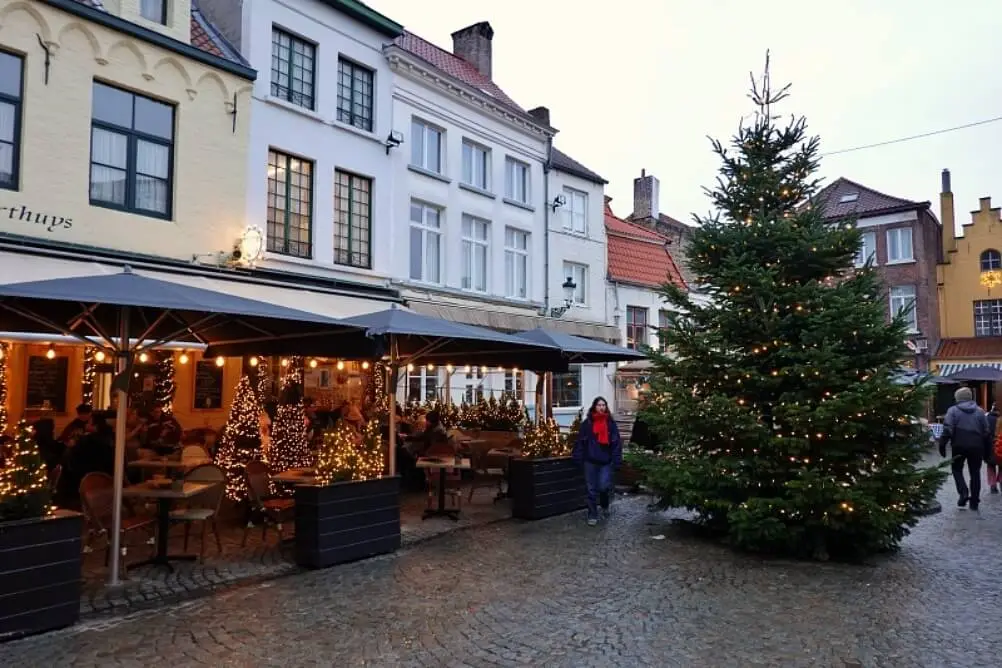
Outdoor dining still an option in colder months with heaters and blankets
Things to Prebook
Visiting Bruges during the winter, and specifically for the Christmas markets, it’s a good idea to prebook as much as you can as it can get busy. Whether you usually book far in advance or like to wing it, accommodation in Bruges can get limited and expensive if you leave it last minute, so it’s a good idea to book your accommodation as early as you can.
In terms of entry tickets, if you know there are sights you really want to visit such as the Belfry Tower or museums, then book your tickets to ensure you’ll get in and don’t have to queue too much. You can also pre-purchase a Musea Brugge card that’ll give you free entry to 11 select sights in the city.
How to Get to Bruges
For such a small city, Bruges is very well connected. With its own train station just a short walk from the city centre, visitors can easily take the one hour direct train from Brussels to Bruges. This quick connection means it’s easy and convenient to arrive in Brussels by plane or Eurostar, then enjoy the short train ride to Bruges.
If you’re arriving by train, the station you need is Brugge.
You can catch a direct train from Brussels Central station, and often Brugge isn’t the final destination so check the train number (usually IC followed by numbers) to find the right train.
From Bruges train station to the city centre, you can either walk, take a bus or jump in a taxi.
Taxis are easy to come by in the city, and reasonably priced. For a transfer from Bruges train station to Grote Markt, you’d be looking at about €10 depending on traffic. You’ll find a taxi rank outside the train station, and in Grote Markt, but you can also ask your accommodation to book you a taxi for a certain pick up time.
Don’t be alarmed if the taxi drives in a direction you’re not really expecting; the city has a lot of one way streets and avoids the main centre so taxis often have to take a longer route around the city centre.
Looking to arrive in Bruges by car? No problem! The city is well connected to major roads in Belgium, and also to the nearby port town of Zeebrugge. Yep, that means you can get the ferry to Bruges too! You probably won’t need your car while you’re exploring the city, so a hotel with a car park would be a great idea.
How to Get Around Bruges
The easiest way to get around Bruges is by foot. It’s a compact city centre and full of charming cobblestone streets that are dreamy to explore. If you prefer to join a walking tour to be guided around by a knowledgable pro instead of just wandering, there are a number of paid walking tours and even free walking tours available.
Buses cover the wider city, and offer an easy transfer from the train station to the city centre if you don’t want to walk. To see which bus you need to get where you’re going check on rome2rio.com or Google Maps.
Bicycles are readily available to hire in Bruges, and with many of the streets designated as no car areas, it’s easy to get around if you can dodge the tourists in the streets. The main attraction of hiring a bike in Bruges is to escape the city centre and venture out to see the sights that are just a bit too far to walk to.
You can hire a bike in Bruges from many places, and the tourist board has recommendations of their best places with opening times. If you’d prefer to join a guided bike tour, there are a number to sign up to.
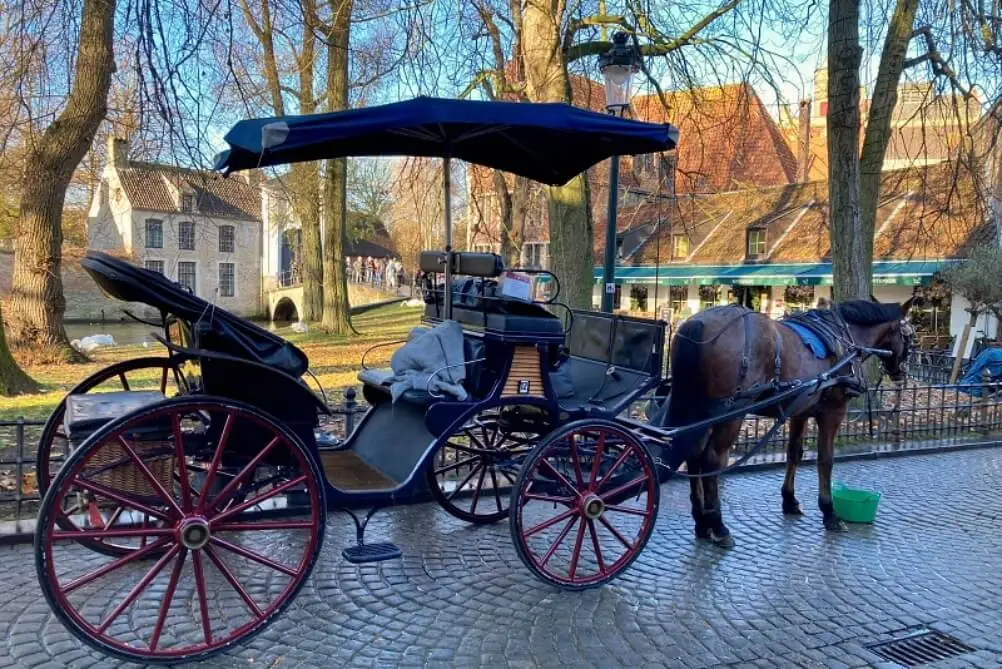
In a city as romantic as Bruges, of course there’s the option to take a horse & cart tour of the city. They’re pretty pricey, and of course not everyone supports the practice, but it sure is a unique experience. The tours cover a fair bit of the ‘big’ sights, and there’s a short break in the middle to give the horse time to rest and have a drink. As it gets pretty chilly around Christmas, most tour providers will have blankets to hand to keep you warm as you tour the city.
With so many canals and waterways, it’s the perfect opportunity to explore the city by boat. Bruges canal tours are popular, and run in both summer and winter, offering a unique way to see the city. It’s not really a public transport option, more of a luxurious alternative to sightseeing by foot. Tickets can be bought on the day, or in advance if you’re interested in a canal tour and walking tour combo.
Where to Stay in Bruges
Bruges is a compact city, so you can’t go too far wrong with where you choose to stay. Saying that, with just 2 days in Bruges you don’t want to spend too much of your time getting in and out of the city centre. For central landmarks to base yourself near, look for somewhere within walking distance of the Grote Markt, Sint-Salvatorskathedraal or Ankerplein.
On my previous visits, I stayed at Martin’s Brugge, a charming, modern hotel just behind the Belfry Tower and most recently at Grand Hotel Casselbergh Brugge. I was very impressed by the hotel, with comfortable rooms and a welcoming hotel bar to warm up in after cold days exploring the city and Christmas markets. Both are conveniently located, but are just a couple of the options available in Bruges.
When to Visit Bruges
Bruges is a city that welcomes visitors year round. This is a guide to spending time around Christmas in Bruges, so December to January would be best time to visit to make the most of this information, but if you’d like to visit at other times of the year then summer is your best option. With less chance of rain and warmer temperatures that don’t often go much above early 20c, the days are still comfortable for walking around and exploring.
Where to Visit After Bruges
Although a weekend in Bruges is a lovely amount of time to really enjoy the city, it is possible to see most of it in a day, leaving you with a spare day that you can use to venture out and visit another Belgian city. Brussels is the obvious choice being the capital city and a quick 1-hour train ride away, but don’t write off a visit to Ghent or Antwerp instead.
If you like Bruges, chances are you’ll like Ghent too. It’s just 25 minutes away by train, though some say they’re quite similar cities and not to do both in the same trip. But, Ghent does have it’s own personality and a castle with the best audioguide – I’d definitely recommend it if you visit Ghent! – so you can decide for yourself if they are similar.
If you’d like somewhere a little different to Bruges, Antwerp is an hour and a half train ride away, offering one of the most stunning train stations in Europe. It’s known for the diamond trade, historic centre and bustling port.