The best Florence to Siena day trip uses the direct bus, starts early, and keeps the plan focused on Siena’s historic centre. You do not need to add San Gimignano, Monteriggioni, or a winery to make the day feel full. Siena rewards a slower visit: arrive before the busiest hours, walk the medieval lanes, spend proper time in Piazza del Campo, and leave room for a long Tuscan lunch.
Expect hills, uneven paving, steep lanes, and a day that feels more physical than a museum-heavy day in Florence.
Is a Florence to Siena day trip worth the long day?
Yes, if you want a city with a completely different shape and mood from Florence. Siena is smaller, more tightly built, and arranged around one dramatic public space rather than a long list of Renaissance landmarks. The trip works best when you treat Siena as the destination, not as one stop in a rushed Tuscany checklist.
The clearest reason to go
Siena gives you a strong sense of place in a compact area. From the main bus arrival area, you can reach the historic centre on foot and spend most of the day moving between Piazza del Campo, the cathedral complex, the civic buildings, and the narrow streets of the seventeen contrade. The city feels medieval in a way Florence does not. Its streets bend, rise, disappear under arches, and open suddenly onto views of the surrounding hills.
The day trip also works well for travellers who want culture without planning five separate museum visits. You can choose one major interior, such as the cathedral or Santa Maria della Scala, then let the rest of the day happen outdoors.
Who should skip it
Skip Siena for now if you have only one full day in Florence and still want to see the Uffizi, Accademia, Duomo, and Oltrarno. Adding a long transfer will make that Florence day feel fragmented. Siena is also a poor fit for anyone who dislikes hills, stairs, or walking on stone streets. A stroller, wheelchair, or rolling suitcase needs extra planning because some lanes are steep and the easiest route is not always the shortest route.
For most visitors who have at least three days in Florence, the trip is a strong choice.
Which transport option works best from Florence to Siena?
The direct bus is the best choice for most independent travellers. It normally brings you closer to the historic centre than the train, avoids a rail change, and makes the day easier to control. The official regional operator lists the direct 131R route and the slower 131 route, so check the live planner before leaving your accommodation.
| What to expect | Best for | Main drawback |
|---|---|---|
| Direct road journey from Florence toward Siena, usually around an hour and a quarter to an hour and a half depending on traffic and stops | Most day-trippers who want the simplest route | Traffic can delay the return |
| Slower route with more intermediate stops | Travellers whose departure time suits this service | Less efficient for a short visit |
| Rail route toward Siena, often involving a connection or a longer door-to-door journey | Travellers who prefer rail or have a convenient connection | Siena station is about 3 kilometres from the historic centre |
| Flexible access to the countryside and villages outside Siena | Visitors combining Siena with rural stops | Historic-centre traffic restrictions and parking decisions |
How to choose the bus without guessing
Open the official Autolinee Toscane timetable the evening before and again on the morning of departure. Search Florence to Siena, confirm the departure stop, and save the return options. The operator separates scheduled timetables from live travel information, and the active summer or winter service can change the useful departures.
Do not rely on a screenshot from a travel forum. A departure listed online may use a different stop, serve a different day, or be affected by a strike. Leave a buffer of at least one possible service between your planned return and an important dinner, train, or flight in Florence.
What is the best one-day Siena itinerary?
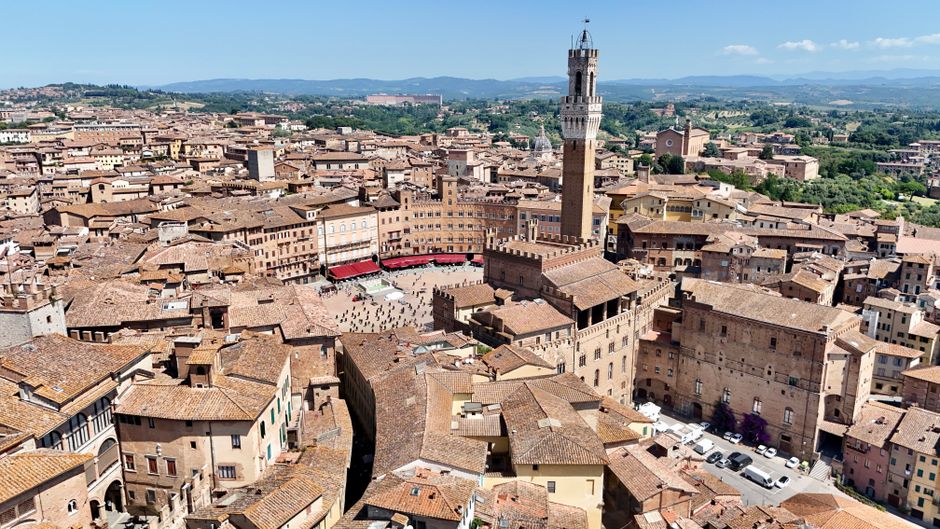
Use this route as a framework, not a race. It leaves space for queues, photographs, lunch, and the small discoveries that make Siena feel different from a guided checklist.
- 08:00–09:30: Depart Florence. Choose an early direct bus and arrive with enough time to orient yourself. Keep your ticket information and return plan available offline in case the mobile signal drops in the hills.
- 09:30–10:15: Walk toward the centre. Follow signs toward Piazza del Campo rather than trying to see side streets immediately. Use this first stretch to understand Siena’s steep layout and locate a café, public toilet, and your return route.
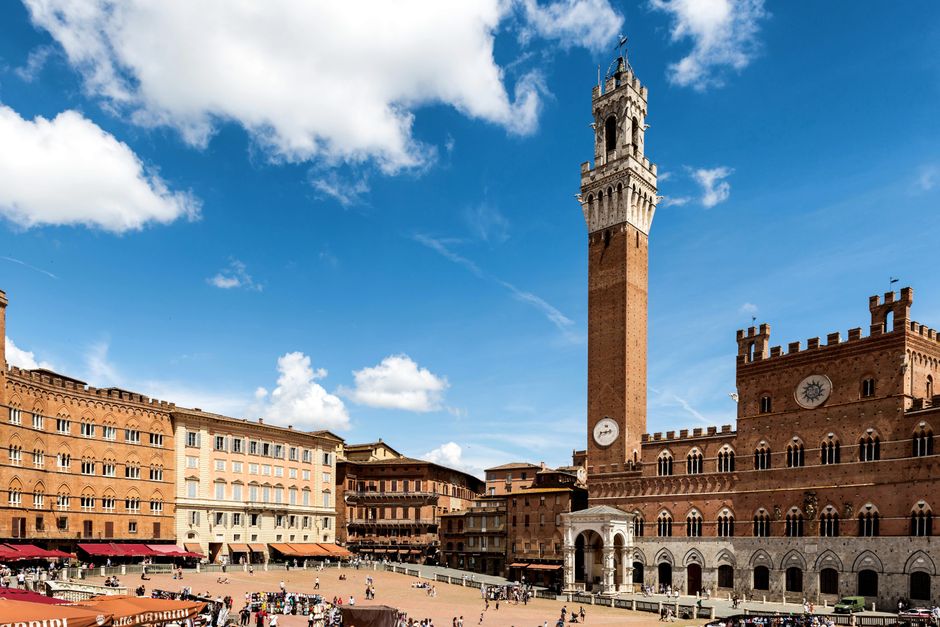
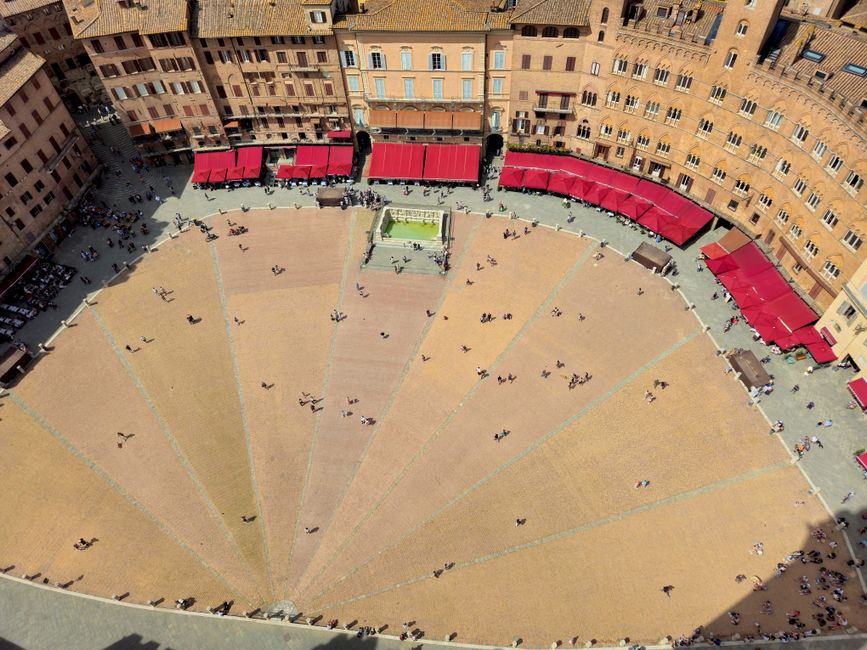
- 10:15–11:15: Start at Piazza del Campo. Stand in the square before you enter a museum. Notice the shell-shaped paving, the slope, the Palazzo Pubblico, and the Torre del Mangia. The square makes more sense when you see how every surrounding street feeds into it.
- 11:15–13:00: Choose one major interior. Visit the Duomo complex if art and architecture are your priority. Choose Santa Maria della Scala if you prefer a larger museum with layered history. Check opening times and entry rules for your date because religious festivals and special events can alter access.
- 13:00–14:30: Eat away from the centre of the Campo. Walk two or three streets out before choosing lunch.
- 14:30–16:00: Wander a contrada district. Pick one direction and follow the lanes without trying to visit all seventeen contrade. Look for small fountains, stone arches, workshop doors, and views over the rooftops.
- 16:00–17:00: Add one viewpoint or tower. Climb only if your legs and weather allow it. The view from above is valuable, but it is not worth turning the final hours into a physical test.
- Siena’s lanes are easy to misread when you are tired.
- After 18:00: Return to Florence. Keep the evening light. A late return is common when traffic builds on the road, so avoid booking a non-refundable activity immediately after the planned arrival.
The strongest version of this plan includes one major interior, one long meal, and several unplanned walks. Trying to add San Gimignano or a wine estate turns a Siena day into a transport day.
What should you see in Siena beyond Piazza del Campo?
Piazza del Campo is the obvious starting point, but the city becomes memorable when you connect the square to the buildings and streets around it. Give yourself at least three hours for the central sights before lunch or you will see the postcard version of Siena and miss its structure.
Build the morning around the cathedral complex
The Cathedral of Santa Maria della Scala is the clearest choice for first-time visitors who want a major visual experience. The striped marble exterior sets the tone, while the interior holds a dense collection of sculpture, painting, carved details, and patterned flooring. Access to different parts of the complex can vary by date, so check the official visitor information before you commit your morning to a specific route.
Move slowly inside. Look up, then look down. Siena’s cathedral is not a room you understand from one photograph. If a special floor section is open, the viewing conditions may differ from the rest of the building. Follow the staff instructions and expect some areas to require a separate ticket or time slot.
Use the civic centre to understand Siena
After the cathedral, walk back toward Piazza del Campo and consider the Palazzo Pubblico. The building explains how Siena presented civic power, while the square explains how that power met daily life. The two places belong together. Seeing only the square gives you a beautiful shape; seeing the civic rooms gives that shape a political and social meaning.
If you want a quieter alternative, spend part of the afternoon in Santa Maria della Scala or follow the streets toward the Basilica of San Domenico. The basilica sits on higher ground and gives you a different view of the city’s layered streets. It also rewards visitors who enjoy religious history more than crowded lookout points.
Do not make the common mistake of treating every landmark as a box to tick. Siena’s best moments often happen between the headline sights: a shaded lane near Via di Città, a sudden view across the rooftops, or a quiet church reached by following a sign you almost ignored.