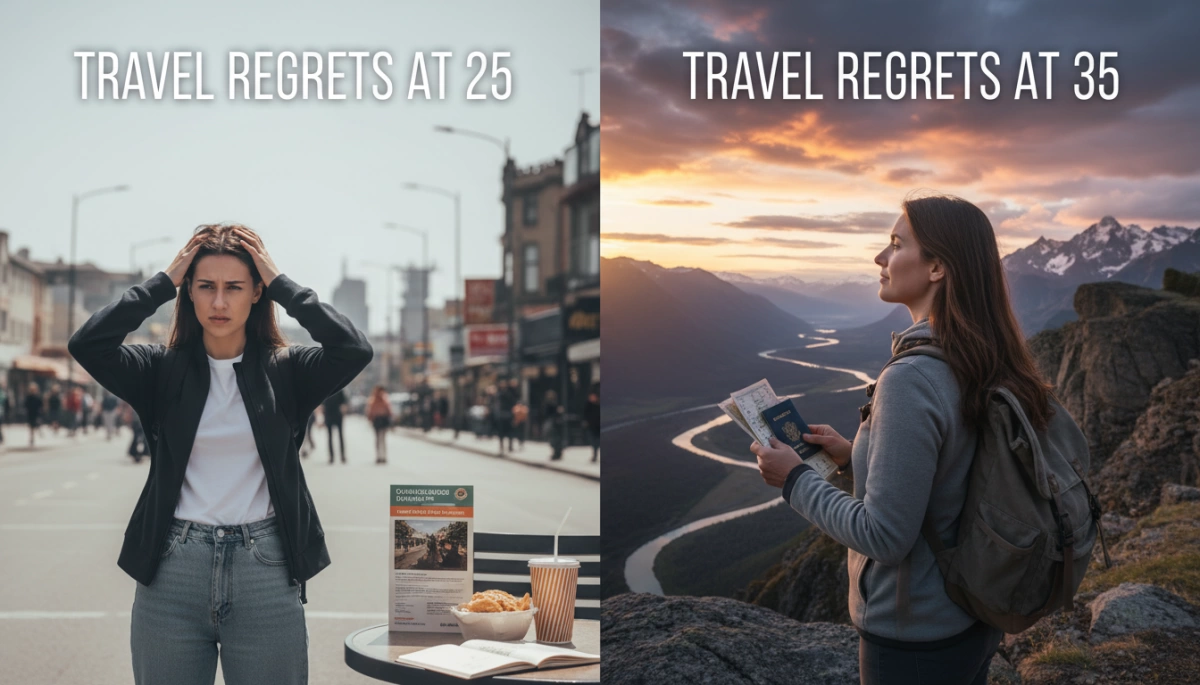
When I was 25, travel regrets meant cramming five countries into ten days, surviving on $12 hostels, and pretending I could party all night without consequences. Fast forward to 35, and the story flipped—now I regret rushing my trips, skipping comfort, and missing out on truly authentic moments because I was too focused on saving a few bucks or squeezing in one more city. If you’re noticing your travel style evolving from “invincible budget backpacker” to a seeker of slow travel, genuine experiences, and smart investments in comfort, you’re not alone. This isn’t just nostalgia—it’s a big shift in how we value our time, energy, and memories. Ready to see how my biggest travel regrets at 25 vs 35 reveal some surprising lessons? Let’s dive in.
The Pacing Regret: Sprinting vs. Strolling
At 25: The Regret of “Not Seeing Everything”
In my mid-twenties, I was caught up in the checklist mentality—the need to cram as much as humanly possible into every trip. Picture trying to visit five countries in ten days, sprinting from one landmark to the next, obsessively chasing the next Instagram photo op.
The fear of missing out (FOMO) fueled this exhausting pace. I was convinced that if I slowed down, I’d somehow lose the chance to “see it all.” So, I’d spend entire days rushing through museums, hopping on night buses, and surviving on caffeine alone.
The reality? I technically saw everything, but barely absorbed a thing. It’s travel burnout disguised as ambition—your eyes are glazed over because your brain is overloaded. You have a passport full of stamps but almost zero memories.
At 35: The Regret of “Moving Too Fast”
Flash forward a decade, and my travel style shifted to slow travel—a whole new world. Spending a week or more in one city isn’t just indulgent; it’s transformative. I learned that savoring small moments, like a random afternoon nap or a quiet coffee break in a boutique café, is more valuable than ticking off another train stop.
Now, I regret rushing through itineraries that don’t factor in downtime. When you value “being” over “doing”, travel stops feeling like a race and becomes more about genuine experience and authentic cultural immersion.
Slow travel isn’t just trendy; it’s sustainable tourism for the soul. It helps avoid travel burnout and lets you really connect with a place, rather than just skim the surface.
Key takeaway: At 25, the mistake was sprinting to “see everything” but capturing little. At 35, the regret is moving too fast and missing the richness of slow travel moments. Balance is key.
The Financial Regret: Price Tag vs. Value
At 25: The Regret of “Spending Too Much”
When I was 25, I obsessed over snagging the absolute lowest prices—like that $12 hostel bed that came with bedbugs. The chase for budget deals was relentless, but sometimes, it meant sacrificing comfort and peace of mind. I often skipped out on paid experiences like museums or guided tours just to save cash for cheap beer. Looking back, those missed opportunities were priceless losses in authentic cultural immersion and experiential travel.
At 35: The Regret of “Being Too Cheap”
Now, at 35, I regret trying to squeeze every dollar. Saving $50 on a flight that included three layovers ended up costing me two full days of energy and focus. This is where the idea of Time Equity hits home—paying a bit more for a direct flight or a centrally located hotel isn’t a splurge; it’s an investment in comfort and efficiency. Missing out on those upgrades means regretting lost time and unnecessary travel burnout. Sometimes spending wisely unlocks a smoother travel experience, especially as I appreciate boutique hotel experiences and comfort travel essentials more.
Balancing price and value becomes crucial, and understanding that your time and well-being are part of the travel cost changes your perspective entirely.
For a good example of curated itinerary planning that balances comfort with authentic experiences, check out how to spend 10 days in Po.
The Social Regret: Quantity vs. Connection
At 25: The Regret of “Not Partying Enough”
In my twenties, there was this constant pressure to be social 24/7, especially in hostel common rooms where everyone seemed to lump together like one big traveling crew. I felt like if I wasn’t out every night, I was missing out. This led to meeting dozens of people across different countries—but the truth is, most connections felt pretty superficial. I ended up knowing many faces but very few real people. That constant chase to be part of the crowd often left me feeling more isolated than connected.
At 35: The Regret of “Ignoring Local Culture”
Fast forward to my thirties, and the regret shifted. I noticed that I’d spent much of my twenties hanging out with fellow tourists rather than locals. Authentic cultural immersion became more important than club nights or party boats. I craved genuine experiences—sharing meals with locals, exploring off-the-beaten-path neighborhoods, and having deep conversations instead of shouting over loud music in crowded bars. Focusing on quality time with new friends or even enjoying solitude brought a richer, more meaningful texture to travel.
This shift aligns with the growing trend of solo travel in your 30s and the broader slow travel movement, where the goal is to savor the moment and connect deeply rather than just tick social boxes.
For those looking for practical advice on balancing social time with cultural connection, tips on how to spend one day in Piha show how a quieter, nature-focused day trip can offer authentic experiences beyond the typical tourist scene.
Embedding keywords like authentic cultural immersion, solo travel in your 30s, and slow travel movement helps to capture the essence of these social travel regrets, making the content both SEO-friendly and genuinely useful for travelers evolving in their journey.
The Physical Regret: Invincibility vs. Sustainability
At 25: The Regret of “Packing Too Heavy”
When I was 25, I always overpacked—a bulky 70L backpack stuffed with “just in case” items that I barely used. Lugging around unnecessary gear just slowed me down and drained my energy. On top of that, I ignored basic physical limits like sleep and nutrition. Late nights, poor meals, and pushing through exhaustion felt like part of the adventure, but in reality, it just led to travel burnout and less enjoyment.
At 35: The Regret of “Neglecting My Body”
Now, at 35, I’ve learned that self-care on the road isn’t optional. A good travel pillow and comprehensive travel insurance became non-negotiable essentials. I regret not prioritizing sleep hygiene before—I now realise how critical it is to stay rested to truly enjoy each destination. Plus, a hangover at this age can ruin two days of a quick three-day trip, a harsh lesson in sustainable travel. Slow travel means respecting your body’s limits, something that wasn’t on my radar when I was younger.
For those embracing the slow travel movement, packing light and focusing on comfort travel essentials can make all the difference.
The Planning Regret: Spontaneity vs. Curation
At 25: The Regret of “Over-Planning” (or total lack thereof)
When I was 25, I swung between two extremes—either over-planning every minute of my trip or going in completely unprepared. The anxiety of the unknown gnawed at me, so I’d load up itineraries with double bookings and too-tight schedules. On the flip side, without a smartphone or solid plan, I sometimes ended up wandering aimlessly, stressing over last-minute decisions. Both approaches caused stress and missed opportunities.
This chaotic style often led to travel burnout, making me forget the joy of just soaking in a place. Looking back, a relaxed balance between planning and spontaneity would have saved a lot of wasted energy.
At 35: The Regret of “Not Booking in Advance”
Now, at 35, my biggest planning regret is not booking key experiences well ahead of time. Missing out on sold-out tours or those bucket list restaurants hurts more when you have limited days to explore. It’s clear that itinerary planning at this stage isn’t about locking yourself into a rigid schedule but about securing quality moments.
Prioritizing must-see experiences in advance means less scrambling and more time for authentic cultural immersion. This thoughtful planning frees you from travel stress while preserving the freedom to explore casually, which really defines slow travel.
For example, when I planned a recent trip to Europe, having reservations at charming boutique hotels and must-visit spots made the whole experience smoother and more enjoyable. If you want some inspiration, checking out detailed guides like 9 Reasons Europe is Better in Autumn helped me balance spontaneous exploration with planned highlights.
Tips to avoid planning regrets:
- Book popular experiences and accommodations early
- Use itinerary planning apps or tools for a flexible yet curated approach
- Leave open time slots for unplanned discoveries or simple downtime
- Balance must-dos with restful “being” moments to prevent travel burnout
Travel planning in your 30s means valuing your time and energy as much as the destinations themselves—invest wisely for unforgettable experiences.
How to Bridge the Gap (Tips for the 30-Something Traveler)
Traveling in your 30s means embracing a new travel identity—it’s completely okay to have outgrown hostels and the 24/7 party scene. Instead, focus on comfort travel essentials that make your trips enjoyable without sacrificing adventure. Balancing nostalgia with your current needs means appreciating the thrill of discovery while prioritizing rest, quality experiences, and authentic cultural immersion.
Here are some practical tips for flashpacking, a smarter alternative to traditional backpacking:
- Invest in a lightweight, versatile backpack that fits all your essentials without overpacking.
- Choose boutique hotel experiences or well-rated guesthouses over dorm rooms to recharge properly.
- Plan slow travel itineraries that let you savor each destination instead of rushing through a checklist.
- Prioritize travel insurance benefits to protect both your health and your gear.
- Seek out local gastronomy and authentic interactions rather than touristy crowds.
- Use digital tools for itinerary planning that save time and reduce travel burnout.
This approach helps you travel sustainably and comfortably, making the most of your time and energy. For instance, when visiting unique spots like the scenic Castlepoint in New Zealand, planning a relaxed schedule ensures you soak in the beauty rather than just ticking off another location on the map.
Bridging the gap is about respecting your evolving travel style while staying open to new experiences—not forcing the old ways just because of nostalgia. Flashpacking offers the perfect balance, letting you enjoy solo travel in your 30s with savvy budgeting and comfort.