Day trips are a traveller’s dream, the ability to get a taste of another place while visiting a city…what’s not to love? If you’re visiting Lisbon or the south of Portugal, taking the time to visit Évora on a day trip from Lisbon is a great choice!
While it may be a compact city with a population of about 55,000 people, it still attracts plenty of tourists due to being a UNESCO World Heritage Site and known for its well-preserved Roman and medieval architecture. It’s not a huge distance from Lisbon to Évora, making a day trip to Évora perfectly accessible.
Where is Évora?
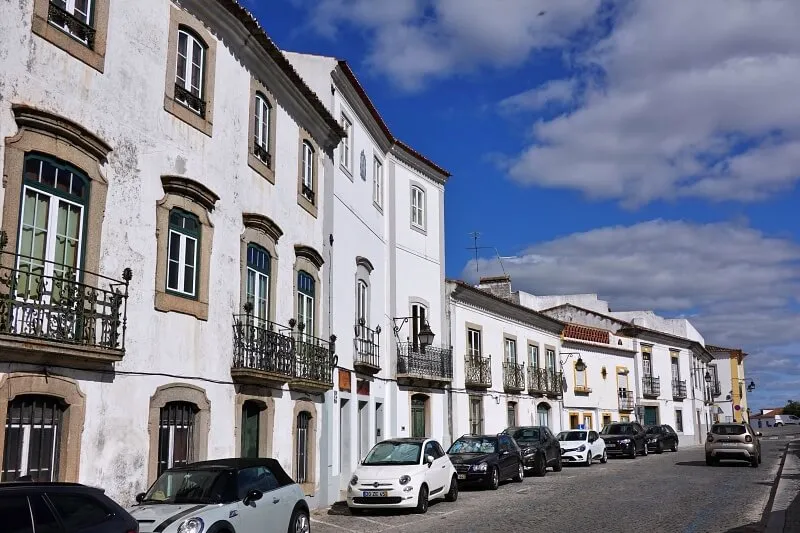
Évora is a city in southern Portugal, in the Alentejo region. It’s located about 140km (87 miles) east of Lisbon and 80 km (50 miles) west of the Spanish border and is the capital of the wider Évora District.
Top Things to Do in Évora on a Day Trip
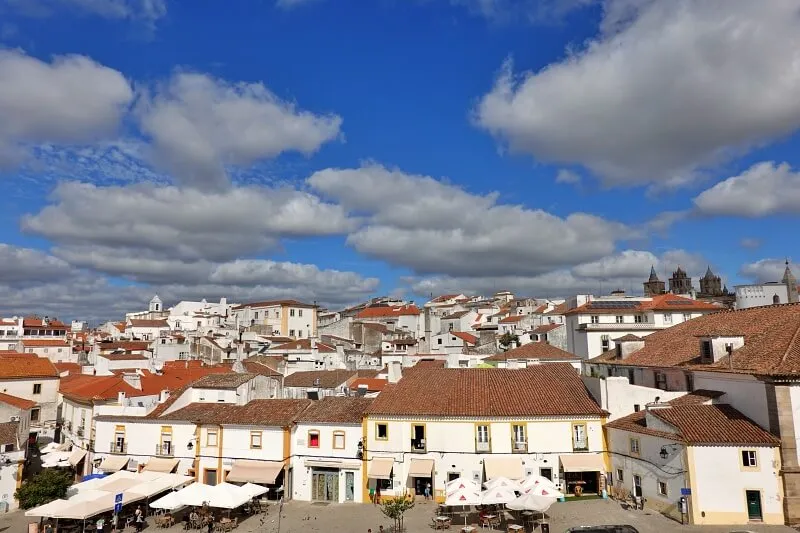
If you’re spending a day in Évora, these are the top 5 things you should be sure to include in your sightseeing. They’re located across the city, but all within walking distance of each other and the journey between them allows you to see the charming white building-lined streets that fill the rest of the city.
Depending how long you spend at those places, you might find you have time to see more and you’re in luck, there’s plenty of things to do and see in Évora to fill your day.
Roman Temple of Évora – Templo Romano de Évora
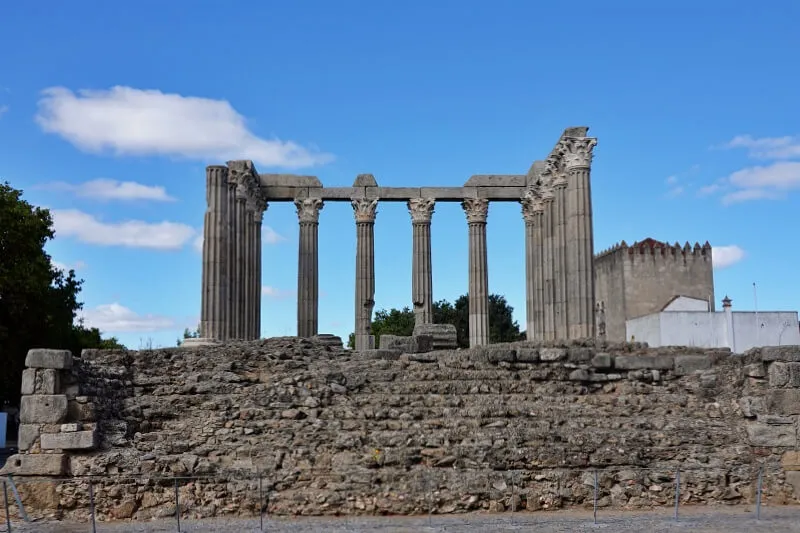
Dating back to the 1st century AD, this is one of the most well-preserved Roman ruins in Portugal. It takes pride of place in the middle of the square, and although visitors shouldn’t climb it, you can walk around the and see the temple remains for free.
The Roman Temple was dedicated to Diana, the goddess of hunting, when it was built. Just next to the temple are Jardim Diana, a small, tranquil place offering visitors a green space to relax or check out the views of the surrounding area.
Cathedral of Évora – Sé de Évora
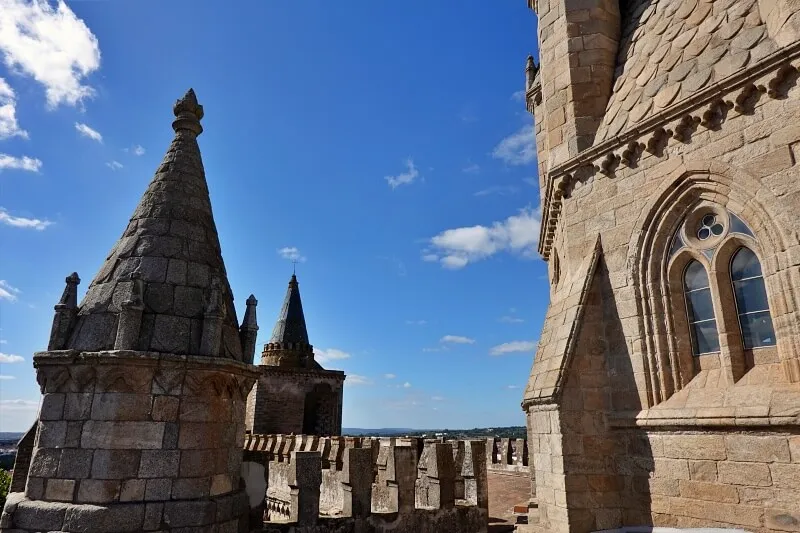
This cathedral is one of the most important Gothic structures in Portugal. It was built between the 13th and 14th centuries and is decked out with beautiful stained glass windows.
While the cathedral is an impressive and historic structure, the rooftop is exceptionally noteworthy. To reach it, you climb a narrow single file staircase which is two way despite not being wide enough to comfortably allow people to pass each other. Stepping out on the roof is a mixture of relief at not having to navigate the stairs anymore and awe at the stunning panoramic views of Évora.
Disclaimer: I wouldn’t take children or clumsy people to the roof. There are some parts where you can literally just walk off the edge of the roof.
Chapel of Bones – Capela dos Ossos
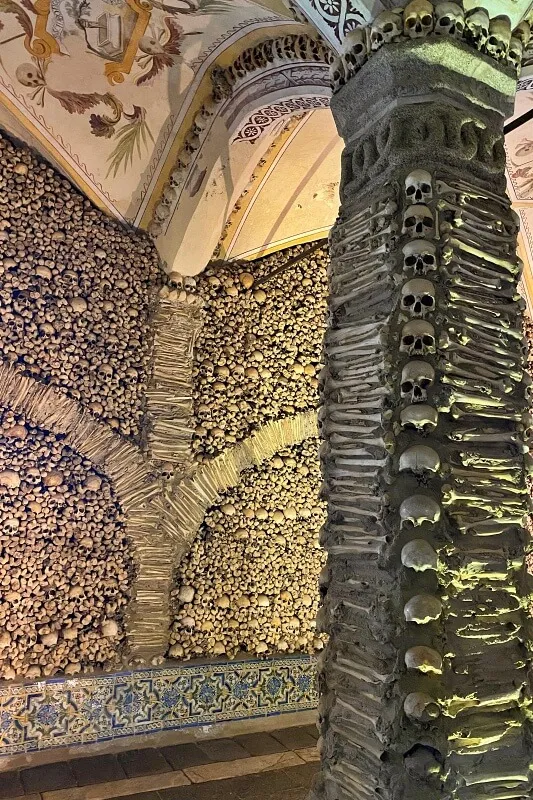
Located just next door to the impressive Igreja de São Francisco, the Chapel of Bones dates back to the 16th Century and while it initially seems a pretty dark place to visit, the history and symbolism of the place is actually very interesting.
Capela dos Ossos gets its name from literally being a chapel of bones. The walls and pillars of the chapel are covered in human bones and skulls, all displayed in a very decorative manner. It’s an interesting sight to see, although not a place that everyone would enjoy a visit to.
The chapel came into existence in the 1500’s due to a concern over how many local cemeteries there were. The local monks decided that to be able to save land space while still honouring those who were buried there, they’d move the bones and display them in the chapel. They believed it would also serve as a reminder to the residents of Évora, which was fairly wealthy at that time, the real values in life and not to be too materialistic.
As you leave the chapel, be sure to have a look at the quote written above the door.
Nós ossos que aqui estamos, pelos vossos esperamos which translates as we bones that are here, waiting for yours.
Giraldo Square – Praça do Giraldo
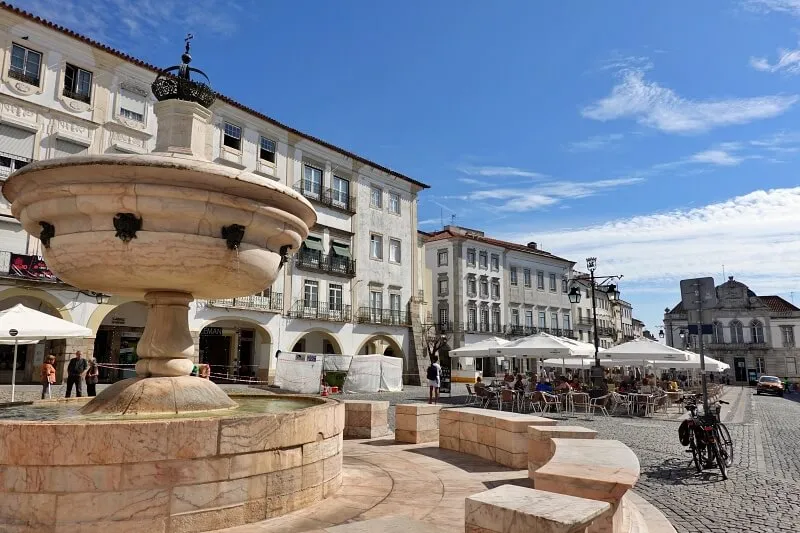
Praça do Giraldo is the main square in Évora, and is named after Geraldo Geraldes. He was considered a hero in his day, saving the region from the Moorish invasion. To thank him for his great deed, King Afonso Henriques made him a governor of the region and the square was subsequently named after him when it was built in the 16th century, 400 years after Geraldo Geraldes’ success.
It’s a great central location, and all roads in Évora lead to Giraldo Square so it really is the heart of the city. There are a number of notable buildings surrounding the square, including the Bank of Portugal and the Santo Antão Church which was built just before the square itself.
There are also a number of shops and cafes in Praça do Giraldo, and the seating stretches out into the square itself, perfect for a bit of people watching! The arches by the shops are known as the Medieval Arches, and are said to have been incorporated into the building to save passing pedestrians from whatever was being thrown out of the windows above before plumbing was installed in houses. Yep, toilet worthy content. These days it’s not such a worry, but the arches provide the perfect cover when it rains, and are also interestingly decorated so worth checking out.
And of course, we can’t visit Praça do Giraldo without seeing the impressive marble fountain taking pride of place near the church. It’s topped with a crown, and has eight water spouts, symbolising each of the roads that lead to the square.
Évora Public Gardens – Jardim Público de Évora
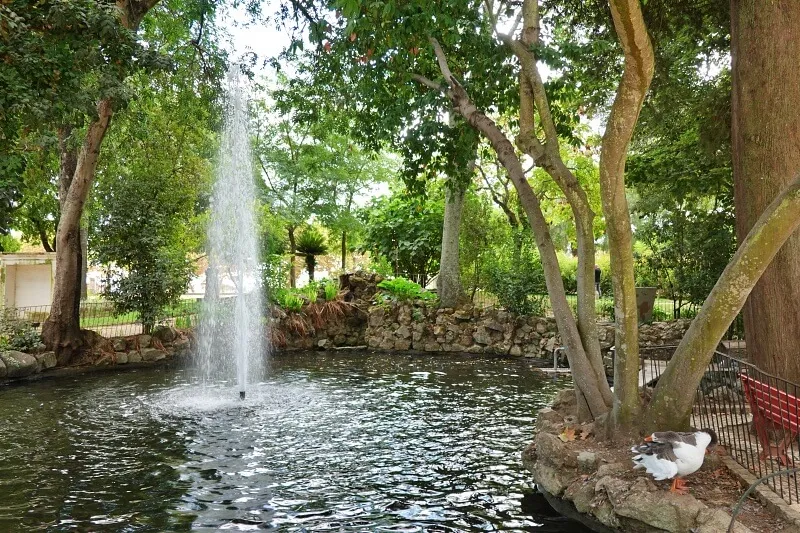
There are a number of green spaces in Évora, but Jardim Público de Évora, or Evora Public Garden, is one of the largest and most centrally located for visiting on a day trip to Évora.
The park was designed by the Italian architect José Cinatti in the 19th century and is home to a variety of trees, flowers, and plants, including many species that were brought to Portugal from other parts of the world. As you wander through the park, you’ll find a number of fountains, ponds, and sculptures throughout.
The Évora Public Garden is a popular spot for both locals and visitors. It’s a great place to take a break from the sightseeing, relax and enjoy the outdoors, and is also a popular spot for picnics, concerts, and other events. There’s a cafe to grab a drink, and if you’ve just been to the Chapel of Bones it’s just next door and perfect for a moment of reflection.
Within the park you’ll find the Palácio de Dom Manuel, a former royal palace that now houses a museum. Just behind the old palace, are the Ruínas Fingidas, a set of fake ruins that were created in the 19th century. They look very convincing, but the name literally translates as fake ruins. Fun to visit regardless!
Jardim Público de Évora is open from sunrise to sunset, and it’s free to go in and explore.
Extras to Fit in if There’s Time
If you’ve got spare time, fear not because there are plenty of other things to do in and around Évora.
Almendres Cromlech
Fans of, for want of a better phrase, really old stuff, will enjoy the rock formations that can be found near the city. You’ll likely want to hire a car to get out there as it’s a 25-30 minute drive out and public transport doesn’t cover the area, or you can join a guided tour to venture out to the sites.
The largest and most popular rock formation is Almendres Cromlech, a megalithic structure thought to be one of the oldest in Europe, dating back to 6BC. It’s a short walk from the car park to the structure, where visitors can admire the varying heights of the ~95 stone blocks, some with carvings, others with some kind of decoration on them.
There’s also a lone megalith about 30 minutes walk away, Menhir dos Almendres, that stands about 4.5m tall. Viewed on its own it is just a large stone, but when seen from above with the rest of Almendres Cromlech it becomes clear that they were intentionally placed as such as they line up with sunrise on the summer solstice.
Spa Time!
If you’re not so into the rocks and prefer instead to indulge in a spa session, then the central spa in Évora to check out is In Acqua Veritas. It’s highly rated, and within walking distance of the central Praca do Giraldo.
What to Eat
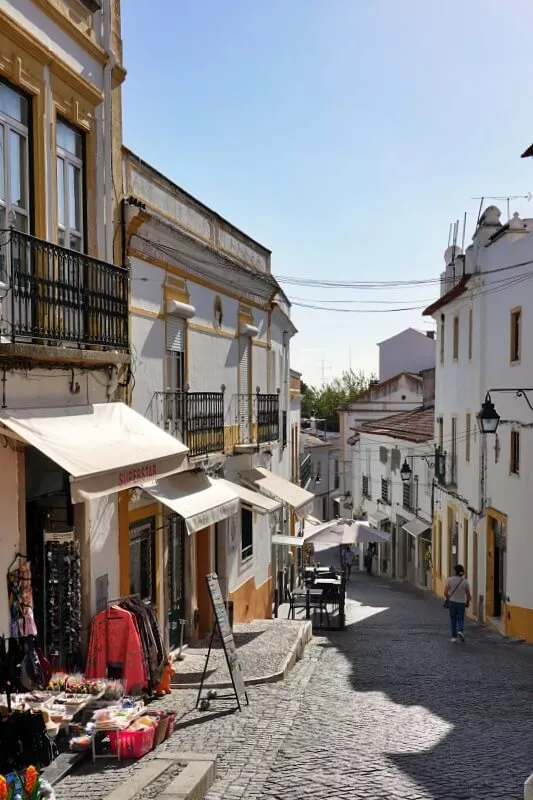
If you have time to stop for lunch or dinner, be sure to scout out one of the restaurants in the side streets. They’re often small, charming and offer delicious Portuguese food.
Some dishes to keep an eye out to sample are:
- Cataplana – a fish stew, often made with clams, named for the traditional dish used to cook the stew. In a country known for great seafood, this is a popular dish.
- Arroz de pato – duck with rice, this is a dish found all over Portugal but is said to have originated from Alentejo region which Évora sits in.
- Porco a Alentejana – pork and clams in a delicious white wine sauce, commonly found in the south of Portugal and originating from the Alentejo region too.
- Pork in red wine and honey – I’ve no idea what this is called in Portugal, but I had it at a small restaurant just off Giraldo Square and it’s one of the most delicious things I’ve ever eaten!
- Francesinha – a meaty sandwich topped with cheese and an egg in a rich beer sauce. Hearty, very filling and popular with both locals and visitors. The francesinha is traditionally from the north of Portugal, but if you’re only visiting the south and this is your chance to try one, go for it!
- Alentejo wine – ok, not a dish to sample but when in Évora, right? Portugal is known worldwide for its amazing wine production, and the wines that come from the Alentejo region are worthy of sampling. In fact, you can even take a wine sampling tour to a nearby town!
How to Get to Évora
If you’re coming to Évora on a day trip from Lisbon, the easiest way to travel by public transport is by train. It’s about 1hr 20 minutes from Lisbon to Évora by train, and tickets can be bought online directly from the train company website (discounts available if bought a week in advance, priced from €7,50 one way). Don’t worry, it’s easy to navigate and available in English.
From Évora train station to the city centre it’s about 15 minutes to walk, or 5 minutes in a taxi.
If you’d prefer to get the bus from Lisbon to Évora, it’s a journey of about 1hr 45 minutes, and can cost from €4,00 one way.
How to Get Around Évora
Exploring by foot is the easiest way to get around Évora, it really is a compact city. However, it’s a typically Portuguese city: hilly! Add that to the cobble stones and it might not be the best way for anyone with mobility issues. While some areas are pedestrian access only, you’ll also be able to jump on one of the small city buses – from Mon – Fri and Saturday AM – or grab a taxi. It’s not worth hiring a car for the time you’ll be in Évora unless you’d like to venture out to some of the sights that aren’t covered by public transport.
Where to Stay
Évora is an easy day trip from Lisbon, but if you’d like to extend your time in the city and really indulge in the slow travel vibe, then there are a few hotels you can check in to. The standard of accommodation in Évora is high, and you’ll be spoilt for choice for somewhere nice, comfortable and centrally located.
During my time in Évora I stayed at Evora Olive Hotel. It was a very comfortable stay, located on a quiet
street but within minutes of the centre of the city, and I’d definitely recommend checking it out.
Is One Day in Évora Enough?
It’s definitely possible to get a good feel for Évora in one day, and that’s what makes it the perfect day trip from Lisbon. Of course, if you have more time to spare then Évora is a great place to spend a few days for real slow travel vibes, time to indulge in a bit of spa relaxation or to get back to nature and see a side of Portugal not many get to experience.
Is Évora Worth Visiting?
Absolutely! It’s an easy day trip to Évora from Lisbon and you’ll get to see a city awarded UNESCO World Heritage status, full of history and great food while also still retaining the small city charm that isn’t overrun with tourists. Plus, how often do you get to visit a city with a chapel decorated with bones?