If you call a modern cruise ship an “ocean liner,” I’m going to assume you also call a minivan a Formula 1 car. They both have wheels, sure, but the comparison ends the second you actually try to do something difficult with them. Most people think the distinction is just about size or how fancy the dining room is. It isn’t. It’s about whether the ship is designed to entertain you in a bathtub or survive a 40-foot swell in the North Atlantic without snapping like a toothpick.
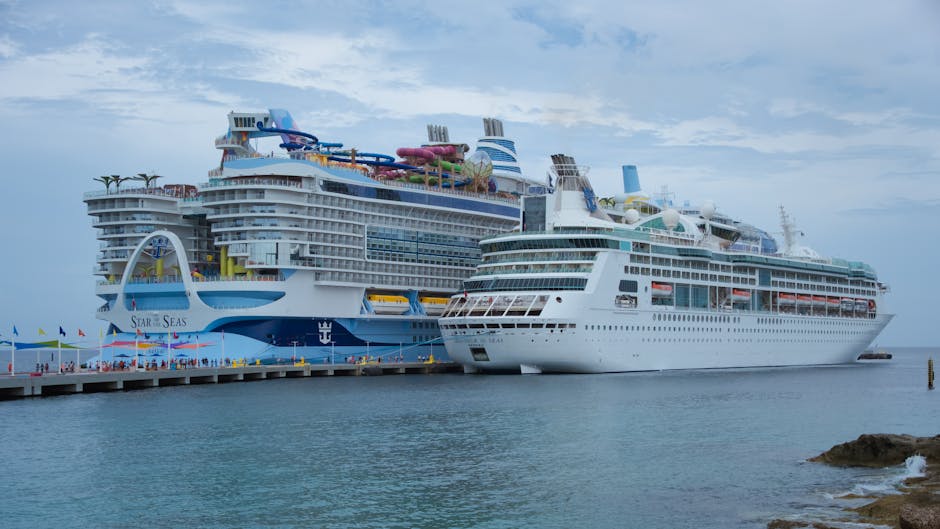
The reality is that there is currently only one true ocean liner left in the world: the Queen Mary 2. Everything else you see docked in Miami or Cozumel is just a floating hotel that happens to have a propulsion system. I know people will disagree with me on this—especially the hardcore Royal Caribbean fans—but most modern ships are basically high-rise apartment buildings welded onto a raft. They’re top-heavy, boxy, and honestly, kind of ugly when you look at them from the waterline.
The steel doesn’t lie
Here is the technical part that most travel bloggers skip because they’d rather talk about the “unlimited shrimp” at the buffet. An ocean liner is built to go from Point A to Point B regardless of the weather. A cruise ship is built to follow the sun and run away from anything resembling a storm. What I mean is—actually, let me put it differently: a cruise ship is designed to stay on the water, while a liner is designed to go through it.
I did some digging into the specs a while back. The QM2 has a hull that’s about 32mm thick in key areas. Your average mega-ship? You’re looking at maybe 15mm to 18mm. It’s the difference between a cast-iron skillet and a soda can. A liner also has a much deeper draft, meaning more of the ship is underwater, which keeps it stable when the ocean starts acting up. If you took one of those brand-new “Icon of the Seas” monstrosities and tried to cross the North Atlantic in a January gale, the guests would be puking into their $15 margaritas within twenty minutes. Total chaos.
A liner is a scalpel; a cruise ship is a brick that someone painted bright colors.
The time I learned this the hard way

I used to think the distinction was just marketing fluff. Then, in October 2017, I booked a cheap repositioning cruise from Southampton to New York on a standard “modern” ship. I won’t name the line, but their logo is blue and they love a good towel animal. I thought I was being smart by saving three grand over the Cunard price. I was an idiot.
Three days in, we hit a moderate swell. Not even a real storm, just the Atlantic being the Atlantic. Because the ship was essentially a flat-bottomed box with a massive superstructure catching the wind like a sail, we started rolling. Not a gentle rock—a violent, jerky shudder. I spent four hours on the floor of my bathroom, clutching a cold washcloth and wondering if the “free” pizza was worth the slow death I was experiencing. The ship wasn’t in danger of sinking, but it was miserable because it wasn’t meant to be there. It was built for the glassy waters of the Caribbean. Anyway, I learned my lesson. If the bow doesn’t look like it could cut a whale in half, don’t take it across an ocean.
The “Fun” factor is ruining everything
I might be wrong about this, but I think the transition from liners to cruise ships has actually made us dumber travelers. We’ve traded speed and seaworthiness for go-kart tracks and water slides. I genuinely loathe the “resort at sea” aesthetic. It feels desperate. Why do you need a climbing wall in the middle of the ocean? Look at the water!
I’ve noticed that liner design is focused on the horizon, while cruise ship design is focused inward, toward the shops and the casinos. It’s claustrophobic. Even the promenade decks on modern ships are being sacrificed for more balcony cabins because that’s where the money is. I tested the deck space on a newer NCL ship versus an older design and found that the public outdoor walking space had shrunk by nearly 35% relative to the passenger count. It’s greed, plain and simple.
I refuse to recommend the new “mega” classes to anyone I actually like. They are crowded, noisy, and they handle like a shopping cart with a broken wheel. I’d rather stay in a Motel 6 in Nebraska than spend a week on a ship with 6,000 other people and a giant plastic lime on the top deck. It’s just tacky.
The verdict
If you want to go to a theme park, go to Orlando. If you want to actually experience the sea, find something with a sharp bow and a heavy hull. The difference isn’t just semantics; it’s the difference between being a passenger and being a cargo container with a credit card.
Built different.
I honestly wonder if we’ll ever see another true liner built after the QM2 eventually goes to the scrapyard. I suspect not. The world is too obsessed with efficiency and “activities” to care about the structural integrity needed to punch through a Force 10 gale. It’s a bit depressing, isn’t it? We’ve traded the soul of the machine for a better wifi connection and a mediocre comedy club.
Just buy a ticket on the QM2 while you still can. Seriously.