You have likely heard the persistent advice that clearing your browser cookies or booking at exactly 3:00 AM on a Tuesday is the secret to finding cheap flights to Amsterdam. It is a comforting thought—the idea that a simple trick can outsmart the multi-billion-dollar pricing algorithms used by major carriers. However, the reality of the aviation market in the Netherlands is far more complex and rooted in logistical constraints rather than browser history. Amsterdam’s Schiphol Airport (AMS) operates under a unique set of pressures, including strict noise caps and significant environmental taxes, which means the traditional rules of budget travel often do not apply here in the way they might for London or Barcelona.
To truly secure a low-cost fare to the Dutch capital, you have to look past the myths and analyze the actual variables: slot allocations, regional competition, and the specific tax structures of the Dutch government. Amsterdam is one of the most connected hubs in the world, yet it is also becoming one of the most expensive to land in. This paradox creates opportunities for the diligent researcher who understands how to navigate the trade-offs between convenience and cost. We are not looking for magic tricks; we are looking at the mechanics of how airlines price their seats on these specific routes.
The Seasonal Economics of Amsterdam Flight Pricing
The pricing of airfare to the Netherlands follows a distinct seasonal curve that is heavily influenced by events rather than just weather. While many travelers assume that winter is universally the cheapest time to visit, the data shows significant spikes around the Christmas markets and the New Year. The real “dead zone” for pricing—and therefore the best time for those seeking cheap flights to Amsterdam—is the window between the second week of January and the end of February. During this period, demand for business travel is stabilizing and the massive influx of leisure tourists hasn’t yet begun. You will face gray skies and a biting wind off the North Sea, but the savings on direct flights can often exceed 40% compared to spring rates.
Spring presents the most challenging pricing environment. The tulip season, specifically the opening of Keukenhof, creates a sustained high-demand period from late March through mid-May. If you are planning to visit during this time, the “booking window” theory actually carries some weight. Data from major aggregators suggests that for the spring peak, prices are lowest approximately 170 days out. This is a departure from the usual 60-day rule because airlines know they will fill every seat during the flower season and have no incentive to offer last-minute discounts.
Late September and October represent the most logical “value” window. The weather remains relatively mild, the summer crowds have dissipated, and airlines begin to lower fares to maintain high load factors before the winter holiday season. During these months, you can often find a middle ground where the flight is affordable and the city is still walkable without heavy thermal gear. It is a period of high nuance; a flight on a Tuesday in October is frequently half the price of a flight on the Friday of the same week, as Amsterdam remains a premier destination for weekend city breaks.
Evaluating Secondary Airports: Eindhoven and Rotterdam vs. Schiphol

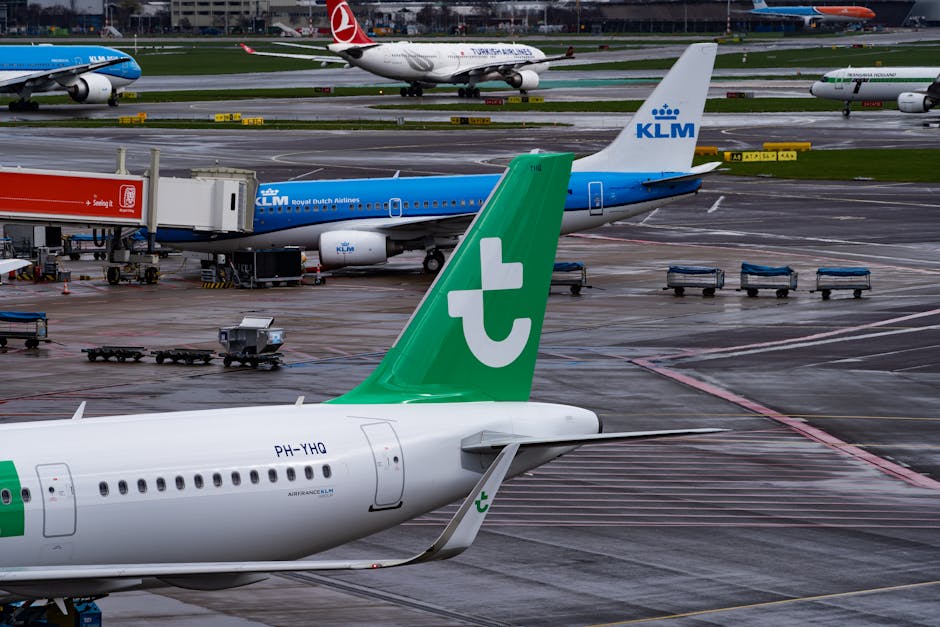
When searching for cheap flights to Amsterdam, many travelers make the mistake of only looking at Schiphol (AMS). While Schiphol is just 15 minutes from the city center by train, it is also one of the most expensive airports in Europe for airlines to operate out of due to high landing fees and the Dutch flight tax. This is where regional alternatives come into play. Eindhoven Airport (EIN) serves as the primary hub for low-cost carriers like Ryanair and Wizz Air. Located about 120 kilometers from Amsterdam, it often offers fares that are significantly lower than those to Schiphol—sometimes as low as €30 for a round trip from other European hubs.
However, the researcher must account for the “total cost of arrival.” A flight to Eindhoven requires a bus or train journey to reach Amsterdam. The Airport Express bus (Line 400 or 401) to Eindhoven Central Station, followed by an NS train to Amsterdam Centraal, takes approximately 1 hour and 45 minutes and costs roughly €25 each way. If your flight to Eindhoven is €100 cheaper than the flight to Schiphol, the detour is mathematically sound. If the difference is only €40, the time lost and the cost of the train ticket negate the savings. It is a calculation of value over time.
Rotterdam The Hague Airport (RTM) is another often-overlooked entry point. It is much closer to Amsterdam than Eindhoven—about 45 minutes by train. While it doesn’t host the same volume of ultra-low-cost carriers, Transavia often runs competitive routes here. For travelers coming from the UK or Mediterranean hubs, checking RTM can occasionally reveal a price discrepancy caused by a lack of search volume compared to the primary Amsterdam route. It is a quieter, more efficient airport, though transport links to the rail network require a short bus ride first.
Airline Comparison: Full-Service vs. Low-Cost Carriers
The battle for the Amsterdam route is primarily fought between KLM (the flag carrier) and the low-cost giants like EasyJet and Transavia. It is a common error to assume that the low-cost carrier (LCC) is always the cheaper option. In the post-2023 aviation landscape, LCCs have become increasingly aggressive with unbundled pricing. By the time you add a cabin bag and a seat selection to an EasyJet fare, it frequently matches or exceeds the “Light” fare offered by KLM, which often includes better service and more frequent flight timings.
KLM uses Amsterdam as its primary hub, meaning they offer massive capacity. On high-volume routes like London-Amsterdam or Paris-Amsterdam, KLM may run 10 or more flights a day. This high frequency creates a “perishable inventory” problem for the airline; they would rather sell a seat for €90 than let it fly empty. Consequently, KLM’s promotional fares can be incredibly competitive, especially if you book through their “Real Deal Days” or similar seasonal sales. Here is a comparison of what you can typically expect on these routes:
| Feature | KLM (Light Fare) | EasyJet (Standard) | Transavia (Basic) |
|---|---|---|---|
| Typical Base Price | €110 – €180 | €45 – €120 | €50 – €130 |
| Carry-on Bag | Included (12kg) | Under-seat only | Under-seat only |
| Seat Pitch | 30-31 inches | 29 inches | 28-29 inches |
| Primary Hub | Schiphol (AMS) | Schiphol (AMS) | AMS / EIN / RTM |
Transavia deserves special mention as it is the low-cost subsidiary of the Air France-KLM group. They often operate the routes that KLM finds less profitable, and they frequently use Schiphol’s Pier M, which is dedicated to low-cost operations. Transavia is often the “sweet spot” for those who want to land at Schiphol but don’t want to pay the full-service premium. Their baggage policies are strict, however, and they have recently begun charging for overhead bin space, similar to Ryanair. If you are traveling with just a backpack, Transavia is almost always the cheapest way into Schiphol itself.
Technical Search Strategies for High-Value Airfare

To find the best deals, you must move beyond basic search queries. One of the most effective methods for finding cheap flights to Amsterdam is the “Open-Jaw” or multi-city search. Because the Netherlands is so well-connected by rail to Belgium and Germany, you don’t necessarily need to fly in and out of the same airport. Often, flying into Brussels (BRU) and taking the Thalys or Eurostar train to Amsterdam, then flying home directly from Schiphol, can save hundreds of dollars on transatlantic or long-haul routes. The train journey from Brussels is less than two hours, and the price of the rail ticket is often a fraction of the airfare difference.
Another technical approach involves monitoring the “Flight Tax” impact. The Dutch government levies a flat tax on every passenger departing from a Dutch airport. In 2024, this tax was increased significantly to approximately €29 per passenger. This tax is the same whether you are flying to London or New York. For short-haul budget flights, this tax makes up a huge percentage of the ticket price. To circumvent this, some savvy travelers book their return flight from a nearby airport outside the Netherlands, such as Dusseldorf (DUS) or Brussels, where the departure taxes are lower, effectively shaving €20-€30 off the total trip cost.
Pro Tip: Use Google Flights with the “Track Prices” toggle enabled for your specific dates, but also use the “Explore” map feature without setting a destination. Sometimes, a flight to a nearby city like Dusseldorf or Antwerp will appear at a fraction of the cost, and the subsequent train ride into Amsterdam Centraal is both scenic and affordable.
Furthermore, consider the “hidden city” ticketing risks. While sites like Skiplagged can show you flights where Amsterdam is a layover on a cheaper ticket to another destination, this carries risks including luggage issues and potential airline bans. A safer technical strategy is to look for “repositioning flights.” When airlines move aircraft between seasons (e.g., moving planes from Mediterranean summer routes to winter hub operations), they often sell these one-way segments at a deep discount. These are rarely advertised on the front page of Expedia but can be found by searching one-way fares during the transition months of May and October.
Navigating Dutch Aviation Taxes and Hidden Arrival Costs
The price you see on a search engine is rarely the final price you pay to reach your hotel in the Jordaan or De Pijp. Amsterdam is a leader in “green” taxation, and this extends to its aviation sector. As mentioned, the Vliegbelasting (flight tax) is a fixed cost that has effectively killed the €10 flight to Amsterdam. When you see a fare for €45, nearly 65% of that is likely taxes and airport fees. This is why you see fewer ultra-low fares to Schiphol than you do to airports like Milan Bergamo or London Stansted.
Once you land, the cost of getting into the city should be factored into your “cheap” flight. The train from Schiphol to Amsterdam Centraal is €5.90 (plus €1 for the disposable card if you don’t use a contactless debit card or OV-chipkaart). Taxis and ride-shares from Schiphol are notoriously expensive, often starting at €50-€60 due to the airport’s distance and regulated taxi queues. If you are arriving at Eindhoven, as discussed, that cost jumps significantly.
To truly maximize a cheap flight, you should also be aware of the baggage dimensions. Dutch carriers, particularly Transavia, have become incredibly pedantic about bag sizes at the gate. Schiphol is a high-traffic airport with narrow boarding bridges; if your “free” carry-on is even an inch over the limit, you may be charged €40 to €60 at the gate. This single fee can instantly turn a budget-friendly flight into a full-price mistake. Always measure your luggage against the specific airline’s requirements rather than assuming a “standard” size exists.
Finally, consider the time of day. The first flights of the morning (departing around 6:00 AM) and the last flights of the night (arriving after 11:00 PM) are consistently the cheapest. However, Amsterdam’s public transport, while excellent, has reduced frequency at night. The night trains (Nachtnet) run hourly between Schiphol and Centraal, but if you are staying outside the main ring, you might find yourself needing a €30 Uber to get from the station to your accommodation, which erodes the €20 you saved by taking the late flight. In the world of cheap flights to Amsterdam, the most successful travelers are those who calculate the cost of the “last mile” before they hit the purchase button.