Portugal’s Car-Free Case Is Stronger Than You Think
Skip the rental car. Most people don’t need one.
Travel blogs push the “you need a car to see the real Portugal” line relentlessly, and it’s partially true — the Algarve coast-hopping between Sagres, Tavira, and Praia da Marinha is genuinely painful on public transport. But the classic 10-day circuit most travelers actually want — Lisbon, Sintra, Porto, a wine valley day trip — is completely doable by train and bus. Better, even. You skip €25/day parking in Lisbon, the stress of Portuguese city driving, and navigating one-way cobblestone streets in Porto’s historic center at rush hour.
Portugal’s national rail operator, Comboios de Portugal (CP), runs a legitimate intercity network. The Alfa Pendular fast train between Lisbon and Porto covers the route in 2 hours 45 minutes for €25–35 booked a week in advance. That’s competitive with budget flights once you add metro time and airport security on both ends.
Why Lisbon Works Perfectly Without a Car
Lisbon’s metro is clean, frequent, and covers the neighborhoods you’ll actually visit. The Lisboa Card bundles unlimited public transport — metro, tram, bus — with free or reduced entry to most museums: €21 for 24 hours, €35 for 48 hours, €46 for 72 hours. Buy it at the airport arrivals hall, Santa Apolónia station, or Oriente station the moment you land.
Both Bolt and Uber operate in Lisbon. A 15-minute Bolt across town rarely exceeds €8. For late nights or connections the metro doesn’t cover cleanly, these apps close the gap without the overhead of car rental, insurance, or parking logistics.
Why Porto Is Even Better
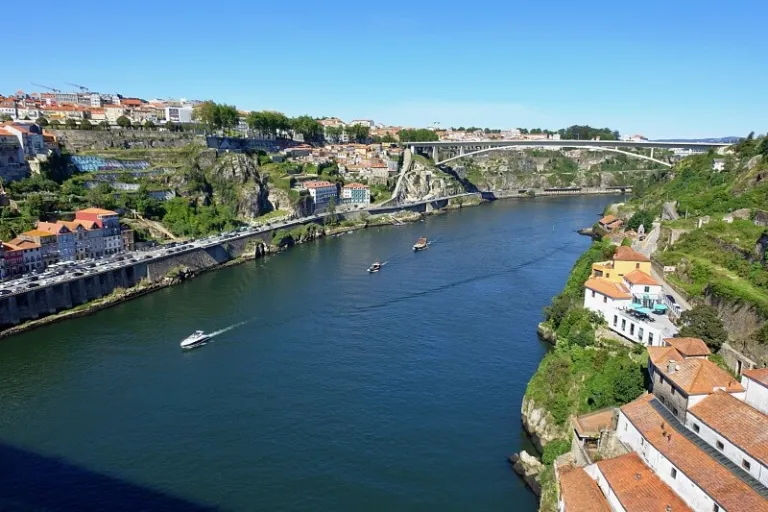
Porto’s metro runs directly from the airport to the city center in 35 minutes for €2.10. The historic core — Ribeira waterfront, Livraria Lello bookshop, Vila Nova de Gaia’s wine caves — sits within a 20-minute walk of itself. Porto is compact in a way that makes not having a car feel like an advantage rather than a limitation. Most of your days there involve walking, which is how you’re supposed to experience it anyway.
The 10-Day Itinerary Built Around Portuguese Rail
This is the route that works. No 5am buses, no connections that hinge on a single late departure, no guessing. It’s structured around train schedules that are frequent and reliable, with Bolt or Uber filling any gaps at the edges.
| Day | Location | Transport | Key Activities | Approx. Cost |
|---|---|---|---|---|
| 1–3 | Lisbon base | Metro, tram, Bolt | Alfama, Belém, LX Factory, Mercado da Ribeira | Lisboa Card 72h: €46 |
| 4 | Sintra day trip | CP train from Rossio — 40 min, €4.60 return | Pena Palace, Quinta da Regaleira | €4.60 train + ~€24 entry |
| 5 | Cascais day trip | CP train from Cais do Sodré — 40 min, €4.60 return | Cascais old town, Boca do Inferno, seafood lunch | €4.60 train |
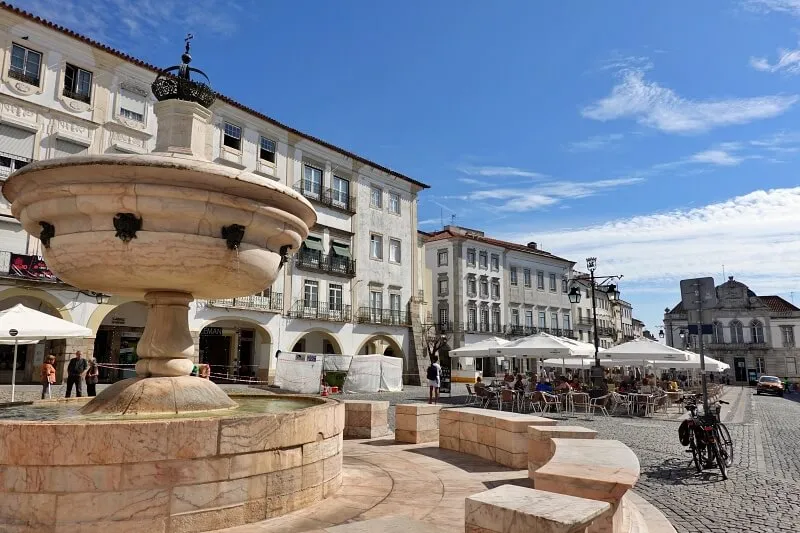
| 6 | Évora day trip | Rede Expressos bus from Sete Rios — 1.5h, ~€12 each way | Roman temple, Chapel of Bones, town walls | ~€24 return |
| 7 | Travel day to Porto | CP Alfa Pendular from Santa Apolónia — 2h45, ~€30 | Check in, explore Ribeira on foot | ~€30 train |
| 8–9 | Porto base | Metro, walking | Livraria Lello, Gaia wine caves, Foz beach, São Bento station | Porto Card: €15/24h |
| 10 | Douro Valley day trip | CP Regional from Campanhã to Pinhão — 2h, ~€12 each way | River scenery, quinta walk-in wine tastings | ~€24 return + tastings |
Lisbon: Three Days Is the Right Call
Alfama rewards slow mornings when the streets are quiet. Belém deserves a separate afternoon — the Jerónimos Monastery takes 90 minutes if you actually read the carved stonework rather than walking through in 20. Don’t stack both neighborhoods on day one. Lisbon’s hills accumulate fatigue faster than maps suggest, and the Time Out Market at Mercado da Ribeira handles lunch without any planning required.
Évora Without a Car: It Works, With One Caveat
No direct train runs from Lisbon to Évora. The bus — operated by Rede Expressos from Sete Rios station — is the only practical option. Departures run every 1–2 hours, the journey takes 1.5 hours, and a single ticket costs around €12. Book at rede-expressos.pt at least a day ahead in July and August. Once you’re in Évora, you’re walking everywhere — the historic center is under 1km across.
The Douro Valley by Train Is Worth the Whole Trip
The CP regional service from Porto Campanhã to Pinhão is two hours of riverbank scenery that guided tour packages charge €80 for. The train costs €12 each way. In Pinhão, Quinta do Crasto and Ramos Pinto both accept walk-in visitors for tastings without advance booking. The last train from Pinhão back to Porto typically leaves around 5:45–6:15pm — check cp.pt the morning you go and set a phone alarm. Miss it and the taxi costs €70+.
Train vs. Bus in Portugal: Every Major Route, Priced Out
The framework is simple: trains for intercity travel, buses for destinations the rail network doesn’t reach. Here’s what that looks like in practice.
| Route | Best Option | Duration | Price (advance booking) | Book At |
|---|---|---|---|---|
| Lisbon → Porto | CP Alfa Pendular | 2h 45min | €25–35 | cp.pt |
| Lisbon → Sintra | CP Line (Rossio or Oriente) | 40 min | €4.60 day return | Viva Viagem machines on-site |
| Lisbon → Cascais | CP Line from Cais do Sodré | 40 min | €4.60 day return | Viva Viagem machines on-site |
| Lisbon → Évora | Rede Expressos bus | 1h 30min | ~€12 each way | rede-expressos.pt |
| Porto → Pinhão (Douro) | CP Regional from Campanhã | 2h | €11–14 each way | cp.pt |
| Porto → Braga | CP Intercidades | 55 min | €7–10 | cp.pt |
| Lisbon → Faro (Algarve) | CP Intercidades | 3h | €25–35 | cp.pt |
Book the Alfa Pendular the Moment Your Dates Are Fixed
CP’s cheap Alfa Pendular fares are yield-managed like airline tickets. The €25 tier vanishes on popular travel days — Friday afternoons and Sunday evenings in summer — two to three weeks out. Prices then climb to €38, then €50+. There’s no tactical reason to wait. The Omio app aggregates both CP trains and Rede Expressos buses if you want to compare all options in one interface before booking directly.
When Flixbus Makes Sense Over the Train
Flixbus runs between Lisbon and Porto for roughly €15–22, which undercuts the Alfa Pendular by €5–15. The trade-off: 3.5 hours in a coach versus 2h45 in a proper seat with a dining car. On a 10-day trip where every hour adds up, losing 45 minutes to save €10 is a bad deal for most travelers. Flixbus earns its place on overnight departures when CP doesn’t run, or if you find a heavily discounted fare on a flexible day.
The Sintra Problem and Exactly How to Solve It
Sintra is the most visited small town in Portugal, and most people arrive at exactly the wrong time and do it in exactly the wrong order. The palaces are worth the visit. A two-hour queue at Pena Palace in August is not.
Leave Lisbon Before 9am — Non-Negotiable
CP trains from Rossio station to Sintra run from around 6am, departing every 20–30 minutes. The 7:45am service gets you into Sintra before the tour buses unload at 10am. Pena Palace’s queue is negligible at 9am. By 11:30am, it’s a 45-minute wait minimum. Go uphill first while your legs are fresh — the castle and Pena Palace sit at the top — then work back down through Quinta da Regaleira in the early afternoon when your feet are tired and you want flatter ground.
Buy a Viva Viagem card (€0.50 at any CP station machine on arrival in Lisbon) and load it with Zapping credit. The Sintra return costs €4.60 on this card. The same card covers Lisbon’s metro, the Cascais line, and city buses — buy it at the airport and use it for the whole trip.
Two Palaces Is a Full Day. Four Is a Forced March.
Pena Palace (€14 with gardens, 90 minutes minimum) combined with Quinta da Regaleira (€10, 2 hours including the tunnels) is a complete and satisfying day. Stacking the National Palace of Sintra and the Moorish Castle on top turns Sintra into a checklist rather than an experience. The tourist bus up the hill from the train station runs for €3–5 and saves 30 minutes of steep climbing. Take it on the way up, walk down after.
What You’ll Genuinely Miss Without a Car
The Algarve coast — Praia da Marinha, Benagil cave, Sagres, Tavira’s islands — is poorly connected by public transport. Trains reach Faro and Lagos, but moving between beach towns means infrequent local buses and long waits in the heat. The same problem applies to Alentejo villages beyond Évora. If either of those regions is central to your trip, rent a car for three or four days, base yourself in the Algarve, then drop the car in Faro or Lagos and fly home from there instead of backtracking to Lisbon.
The Mistakes That Burn Car-Free Travelers
Why Is the Train to Porto Twice the Price I Saw Last Week?
Because you waited. CP’s Alfa Pendular yield management means the cheapest seats on high-demand departures (Friday afternoons, Sunday evenings in July and August) disappear two to three weeks out. Book at cp.pt as soon as your dates are confirmed. The price you see today is almost certainly lower than what you’ll see in two weeks.
Do I Need to Pre-Book the Sintra and Cascais Trains?
Never. Both lines run constantly and accept the Viva Viagem card at the turnstile — no advance booking, no app required. Pena Palace itself sells timed entry tickets that are worth booking 3–5 days ahead in peak season. The train to Sintra, not once.
Can Bolt Just Replace Public Transport Entirely?
It can in theory. In practice, a Bolt from central Lisbon to Belém costs €10 each way; the tram or bus costs €1.60 on a Viva Viagem card. Use Bolt for late nights, luggage transfers, or awkward connections — not as your default transit mode. Porto’s Bolt surges heavily on Friday and Saturday nights after midnight. The metro runs until 1am and eliminates that problem entirely.
What’s the Single Biggest Trap on the Douro Valley Day Trip?
Missing the last train home. There are only 3–4 trains returning from Pinhão to Porto each day, with the final departure typically between 5:45 and 6:15pm depending on the day of week. Check the exact timetable at cp.pt on the morning you travel — not from memory, not from a travel blog that might reference last season’s schedule. Set a phone alarm 45 minutes before departure time. The taxi alternative costs €70 and ends the day on a sour note.
Is the Lisboa Card Worth Buying, or Just Overpriced Tourist Packaging?
Run the numbers against your actual itinerary. Jerónimos Monastery is €10, Belém Tower is €6, the National Tile Museum (Museu do Azulejo) is €5. Hit three museums plus use the metro four times a day for three days, and the 72-hour card at €46 pays off clearly. If you’re mostly walking Alfama, eating well, and spending one afternoon in Belém, load €10 of Zapping credit onto a Viva Viagem card instead — it covers all the transport you need for under a quarter of the price.
The setup that works for this trip: book the Alfa Pendular Lisbon-Porto leg first, pick up a 72-hour Lisboa Card on arrival, load a Viva Viagem card for day trips to Sintra and Cascais, and use Bolt for anything else that needs filling in. That handles 95% of this itinerary without a rental car, a parking space, or a wrong turn.