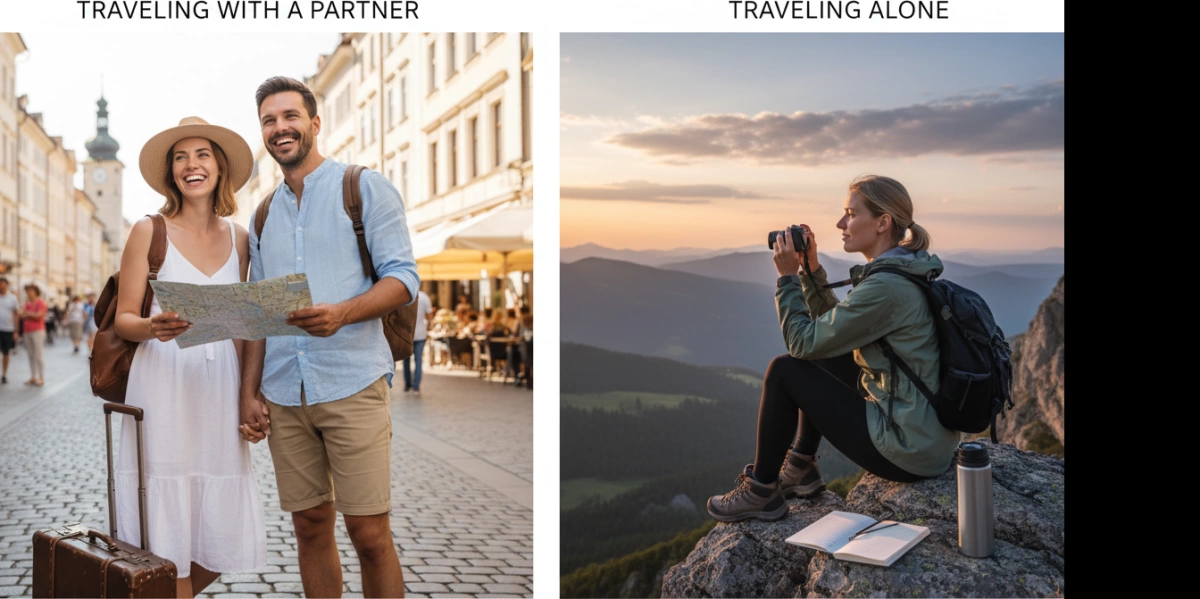
The Great Debate: Independence or Shared Experience?
When it comes to traveling, there’s a classic dilemma: do you go solo for total freedom or bring a partner for shared memories? Solo travel offers the thrill of complete independence—you wake up, make plans, and change course whenever you want. No compromises, no need to negotiate itinerary or restaurant choices. On the flip side, traveling with a partner means companionship, someone to split costs with, share experiences, and support you through any hiccups.
Neither choice is inherently better. It really depends on what you want from your trip right now. If you’re aiming for deep relaxation and a bond-strengthening adventure, traveling with a partner might suit you best. But if you crave self-discovery, a confidence boost, or the excitement of meeting new people, solo travel benefits could be exactly what you need. Your goals—whether relaxation or personal growth—will guide the best style for your next journey.
Round 1: The Financial Reality (Budget & Costs)
Traveling solo often means facing the infamous “single supplement” — that extra fee hotels and tours charge because you’re not sharing a room or package. This solo tax can make solo travel noticeably more expensive, especially in popular destinations where accommodations are priced per room rather than per person.
On the other hand, couples enjoy the power of splitting costs. Sharing accommodation, taxis, and meals often leads to significant savings, making it easier to stretch the budget without sacrificing comfort. Splitting expenses is one of the biggest perks of couples travel, helping balance costs in ways solo travelers can rarely match.
However, budget conflicts can quickly arise when partners have different travel styles. One might prefer budget-friendly hostels or local street food, while the other leans toward luxury hotels or fine dining. This clash can cause friction and force compromises — a common couples travel challenge. Discussing expectations and doing a travel compatibility test beforehand can help avoid costly or uncomfortable surprises on the road.
If you want practical examples of managing costs and travel styles, check out tips on how to balance budgets during your trips at how to spend one day in Innsbruck.
Round 2: Freedom, Flexibility, and Decision Making
One of the biggest perks of solo travel is total freedom. You can wake up with no plan, switch routes on a whim, and there’s no need to ask for anyone’s permission. Want to sleep in or book a last-minute ticket to a new city? Go for it. This kind of independence suits those craving spontaneity and zero restrictions.
On the flip side, traveling with a partner means compromises. You’ll have to negotiate everything from itineraries, wake-up times, to restaurant choices. Maybe you want to hike early, but they prefer a slow morning. Or you crave street food while they lean toward fancy dining. These conversations can be tiring but also part of shared travel experiences and relationship building trips.
That said, solo travel’s freedom comes with a hidden downside: decision fatigue. Making every choice yourself—where to eat, how to get around, what to do next—can quickly wear you out mentally. When you travel as a couple, you share the mental load, which can make planning and daily decisions less stressful.
Finding the balance between freedom and teamwork is key. If you want a taste of solo spontaneity but still enjoy companionship, consider traveling with your partner but allowing some solo days amid shared plans. For the best spot to practice jumping between solo exploration and partner adventures, check out practical tips on the Hundertwasser Art House visit—a place that perfectly blends unpredictability with shared enjoyment.
Round 3: Social Dynamics and Meeting People
Traveling as a couple often creates a kind of “bubble” that’s tough to break. When you’re with someone familiar, it’s natural to stick close and rely on each other for company, making it harder to meet new people or locals. This can limit shared travel experiences outside your duo and reduce opportunities to connect with others on your journey.
On the other hand, solo travel benefits from being a natural conversation starter. Solo travelers tend to be more approachable because they’re visibly open to interactions, which encourages locals and fellow travelers to strike up conversations. Whether you’re exploring a hostel atmosphere or chatting at a café, traveling alone pushes you into social situations where friendships can easily form.
However, it’s important to distinguish between solitude — enjoying your own company and recharging — and loneliness, which can creep in when you feel isolated even in a crowd. Solo travel offers plenty of moments for introspection and self-discovery, but if you’re someone craving connection, it takes a bit more effort to avoid that feeling of isolation.
For those planning trips that blend social opportunities with solo freedom, destinations like Canterbury offer a great balance of friendly locals and communal spaces attractive to solo travelers.
Key points:
- Couples can struggle to mingle due to the “bubble” effect
- Solo travelers are more approachable and encouraged to socialize
- Solitude is different from loneliness—knowing this helps solo travelers thrive
- Choosing the right destination can improve social interactions for solo travelers
This aspect of travel highlights why your preference for either independent travel vs. group travel can drastically shape your experience.
Round 4: Safety, Support, and Logistics
Traveling with a partner often means safety in numbers. It’s easier to have someone watch your bags while you use the bathroom or keep an eye on directions when you’re navigating a new city. If you’re driving, having a co-pilot can make routes less stressful and more fun. This shared responsibility lightens the load and reduces daily travel stress.
On the other hand, solo travel highlights your vulnerability. Managing risks like getting lost, sudden sickness, or unexpected scams falls entirely on your shoulders. While this can feel daunting, it also builds resilience and sharpens problem-solving skills. For solo female travel safety, careful planning and staying aware are critical to minimizing risks.
Emotional support is another big difference. With a partner, you have a built-in shoulder to lean on during delayed flights, missed connections, or other travel hiccups. When traveling alone, you deal with stress internally, which can sometimes feel isolating—but also offers a chance to strengthen personal coping mechanisms.
Balancing safety and support needs often shapes whether solo or coupled travel feels right for you at the moment.
For practical ideas on navigating city logistics, check out tips for visiting landmarks like the Cube Houses in Rotterdam which often require some planning but are rewarding when explored.
Round 5: The Impact on Relationships (With Self and Others)
Traveling with a partner can feel like a pressure cooker for your relationship. Being together 24/7 away from your usual routines can highlight both strengths and flaws. Couples travel challenges often include managing stress, clashing itineraries, or different energy levels. But on the flip side, shared travel experiences create unique memories and deepen bonds you can’t get at home.
Solo travel benefits include a huge boost in self-confidence, resilience, and self-discovery. When you’re alone in unfamiliar places, you learn to rely on yourself, solve problems on the fly, and sometimes confront fears. It’s a powerful form of personal growth that changes how you see the world and yourself.
So, ask yourself: Do you want to build a collection of shared stories with someone else? Or are you after a personal transformation? Either way, both styles shape relationships — just in different ways. If you want tips on solo travel or couples trips, check out how to spend a day in vibrant cities where either choice works well.
The Verdict: Which Style is Right for Your Next Trip?
Deciding between traveling with a partner vs traveling alone boils down to what you want from your trip right now. Both styles have clear perks depending on your current needs—whether that’s relaxation, adventure, or self-discovery. Here’s a quick guide to help you pick:
| Choose Solo Travel If… | Choose Partner Travel If… |
|---|---|
| You’re burned out and crave total autonomy | You want to deepen your bond and create shared memories |
| You want to meet new people and expand your social circle | You need to feel safer and supported |
| You’re seeking self-growth and a personal challenge | You want to save money by splitting travel expenses |
| You enjoy making every travel decision yourself | You prefer sharing the awe of new experiences |
Solo travel offers unmatched freedom—waking up with no fixed plans and exploring at your pace. It’s perfect for those wanting to focus on independent travel, meet new faces, and dive deep into self-reflection.
On the other hand, partner travel often means smoother logistics and shared costs. Couples can split accommodation and meals, lightening the single supplement cost burden. You also get emotional support to lean on during travel mishaps or stressful moments.
Ultimately, assess your goals honestly: if you want to recharge and grow by yourself, go solo. But if connection, financial ease, and safety top your list, traveling with a partner is likely the smarter choice.
For practical tips on navigating destinations together or alone, check out guides like exploring Margate on a day trip to see how your travel style impacts your experience.
Choosing the right travel style now can make all the difference to how fulfilling your trip feels.
Final Thoughts: Can You Have Both?
You don’t have to stick strictly to one style—hybrid travel is a great option. This means traveling with a partner but carving out some solo time during the trip. It lets you enjoy the comfort and shared experiences of couples travel while also reaping the solo travel benefits like freedom, self-discovery, and meeting new people.
For example, you might explore a city together but spend a day or two pursuing individual interests or adventures. This balance helps avoid some common couples travel challenges, like itinerary compromise or travel decision fatigue, and keeps the relationship fresh without sacrificing personal growth.
Trying a hybrid approach can work especially well if you’re on a longer trip and want the best of both worlds: shared memories and personal space. Pairing days apart with joint plans can boost both your enjoyment and your travel compatibility, making for a richer travel experience overall.
For inspiration on how to blend independent travel and shared adventures, check out travel stories like those about spending a day in Hokitika, where solo and couple travelers alike find plenty to enjoy.